Industrial Robot Integration in Garfield Heights, Ohio | LVH Systems
LVH Systems delivers high-authority Industrial Robotics Integration for the defense and regulated manufacturing sectors in Garfield Heights, Ohio. Our technical group in United States specializes in the architecture of hardened robotic cells featuring secure OT network segmentation and deterministic control logic. We integrate advanced force-limiting collaborative robots and high-speed industrial platforms, utilizing real-time feedback from high-resolution encoders and vision systems. By enforcing strict change control and functional safety validation, we ensure that robotic integrations in Ohio meet rigorous audit requirements. Our expertise includes the programming of complex kinematic pathways and the integration of specialized end-of-arm tooling for high-stakes assembly.
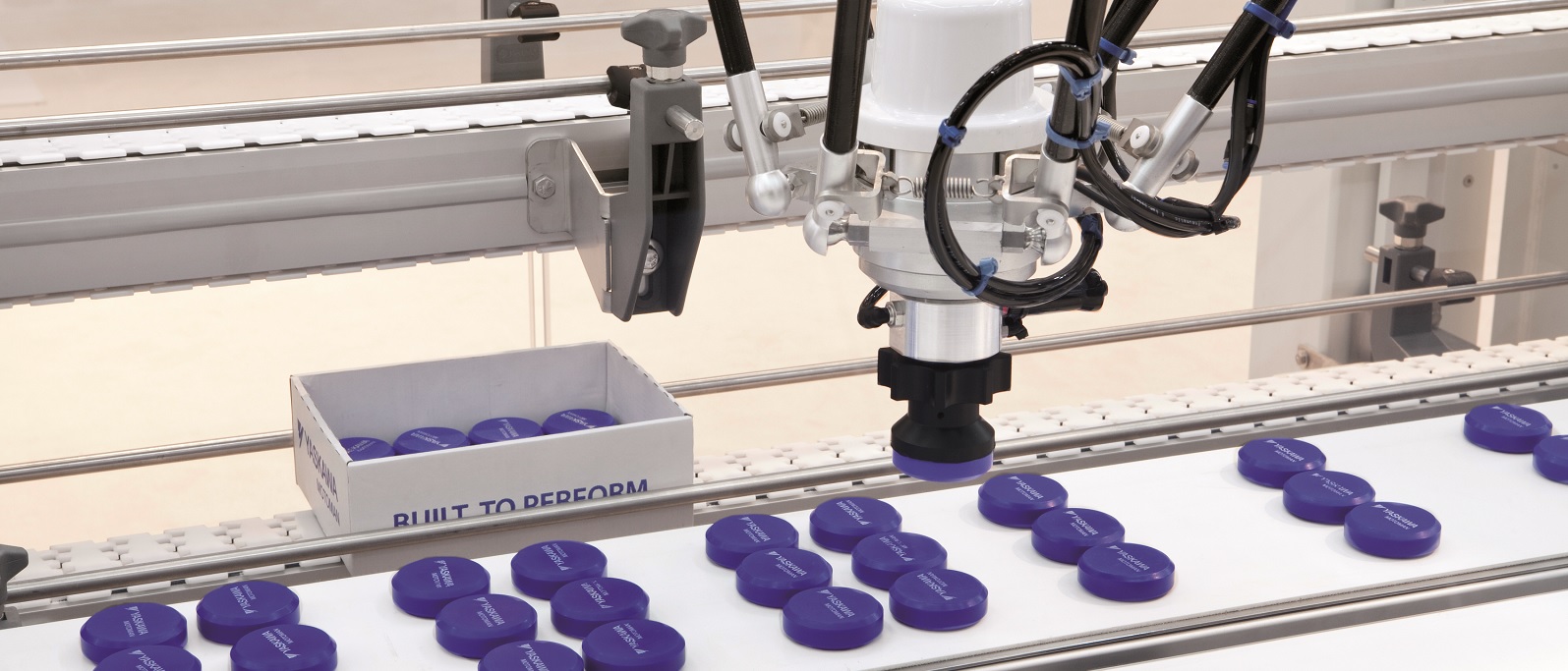
High-precision pick-and-place robotics integration in Garfield Heights, Ohio requires an engineering-led approach to minimize latency and maximize accuracy. LVH Systems specializes in the deployment of high-speed robotic systems for electronics assembly and pharmaceutical handling throughout United States. These systems often utilize high-resolution vision systems to identify small components on moving conveyors, requiring the robot controller to execute complex coordinate transformations in milliseconds. Our technical group in Ohio manages the integration of these robots via EtherCAT, ensuring that servo loop update rates are optimized for sub-millimeter precision. We focus on the engineering of specialized end-of-arm tooling (EOAT), incorporating lightweight materials and integrated sensors to reduce the moving mass and increase cycle times. For industrial operators in Garfield Heights, we mitigate integration risk by performing hardware-in-the-loop (HIL) simulation before on-site deployment, verifying that the pick-and-place logic can handle peak throughput without collisions or dropped parts. Our deployments prioritize diagnostic transparency, allowing technicians to monitor vacuum levels and servo torque profiles through high-performance SCADA interfaces. LVH Systems ensures that every pick-and-place integration is built for high-availability performance in demanding cleanroom or manufacturing environments.
Providing technical integration services to industrial facilities within the Garfield Heights metropolitan area and throughout Ohio.
Technical content for Industrial Robotics Integration in Garfield Heights, Ohio last validated on April 5, 2026.
Services
Robotic Cell Engineering
LVH Systems provides comprehensive 3D reach studies and kinematic simulation for robotic cells in Garfield Heights. We optimize floor space utilization and cycle times in Ohio, ensuring that every mechanical move is validated for efficiency and hardware-limited safety before physical installation commences throughout United States.
Controller Logic Programming
Our engineers develop custom motion logic for FANUC, ABB, and KUKA controllers in Garfield Heights. We focus on creating modular, well-commented code that handles multi-axis coordination and error recovery, providing Industrial Robotics Integration operators in Ohio with a transparent and maintainable control layer for complex industrial processes.
Functional Safety Integration
We implement safety-instrumented systems for robotics in Ohio, adhering to ISO 10218 and ISO 13849 standards. By integrating SIL-rated safety PLCs, light curtains, and safety-rated monitored stops, we protect personnel in Garfield Heights while maintaining the required operational uptime for high-performance United States facilities.
Deterministic OT Networking
LVH Systems architects low-latency industrial networks using EtherCAT and PROFINET to synchronize robot controllers with plant PLCs in Garfield Heights. Our network designs for Ohio ensure sub-millisecond data exchange, allowing for real-time motion adjustment and high-fidelity telemetry across the entire robotic infrastructure.
Field Commissioning & SAT
Our group performs exhaustive on-site Site Acceptance Testing (SAT) for robotic installations in Garfield Heights. We perform I/O validation, tool-center-point calibration, and payload verification in Ohio, ensuring that the integrated system meets every functional requirement before the final handoff in United States.
Robotic Lifecycle Support
We offer post-commissioning technical support and maintenance audits for robotic cells in Garfield Heights. From logic optimizations to servo tuning and grease analysis, we ensure that Industrial Robotics Integration assets across Ohio continue to operate with high availability and precision throughout their multi-year lifecycle.
Our Process
Technical Audit
Mapping existing infrastructure and reach requirements in Garfield Heights allows for an accurate definition of the project scope and hardware constraints before any Industrial Robotics Integration design work commences in Ohio.
Reach & Cycle Simulation
3D modeling of kinematic paths and cycle-time analysis ensures the robotic cell meets your Garfield Heights facility throughput goals while avoiding mechanical singularities or collisions during operation in Ohio.
Electrical & Logic Design
Engineering of the robot control enclosure and the development of modular PLC-to-Robot logic occurs according to IEC standards, prioritizing maintainability for technical teams across United States.
Panel & EOAT Fabrication
Assembly of the control cabinet and specialized end-of-arm tooling in Garfield Heights emphasizes professional wiring and robust mechanical integration, ensuring long-term reliability for your Industrial Robotics Integration project.
Factory Acceptance (FAT)
Comprehensive simulation and testing of the robot logic against simulated field devices validates the system performance before it leaves the lab, reducing the risk of downtime during Garfield Heights commissioning.
On-Site Installation
Physical mounting and field wiring of the robotic cell at your Ohio facility involves rigorous grounding and cable management to protect high-speed communication signals from industrial interference.
Site Commissioning (SAT)
On-site loop checks, tool calibration, and final performance tuning ensure the integrated Industrial Robotics Integration system operates correctly under real production conditions at your project site in Garfield Heights.
Handoff & Documentation
Delivery of uncompiled source logic, reach studies, and redline schematics ensures your Ohio facility maintains total technical ownership and self-sufficiency for the integrated robotic assets.
Use Cases
High-speed primary packaging of delicate bakery products requires rapid vision-guided pick-and-place to handle randomized product orientation on a moving conveyor. We deploy a multi-robot Delta system using Beckhoff TwinCAT and EtherCAT to achieve synchronization at 120 cycles per minute per robot. The control strategy uses 3D vision algorithms to identify product height and orientation, dynamically adjusting the vacuum-based end-effector's kinematic path. This prevents product damage while maximizing cartons-per-hour throughput in a washdown-ready industrial environment.
Assembling high-precision medical instruments requires delicate handling and validated process control. We deploy collaborative robots integrated with high-precision electric grippers and force-feedback sensors. The logic manages the insertion of sub-millimeter components, using force-monitoring to detect and reject misaligned parts instantly. This strategy ensures 100% assembly validation and provides an auditable record of the insertion force for every device, satisfying FDA quality standards while increasing the throughput of the sterile assembly cell.
Handling fragile crystalline silicon wafers in PV solar assembly requires robots with ultra-low vibration motion profiles. We integrate high-speed SCARA robots using S-curve acceleration and non-contact Bernoulli grippers. The control strategy utilizes high-speed I/O to trigger the vacuum state at microsecond intervals, preventing wafer breakage and contamination. The technical objective is to achieve a cycle time of under 1 second per wafer with a breakage rate of less than 0.01%, maintaining high-yield production for global solar markets.
Technical Capabilities
- Safe-speed monitoring during teach-mode is a mandatory safety requirement, restricting the robot to 250mm/s for operator protection.
- Deterministic communication for robotics requires managed switches to prioritize PTP or EtherCAT traffic over non-critical monitoring data.
- Force-torque sensing in the robot base can identify collisions anywhere on the robot arm, providing an additional layer of mechanical protection.
- The Mean Time to Dangerous Failure (MTTFd) is a statistical measure of the reliability of safety-related components in a robotic control system.
- Robot payload capacity is strictly limited by the moment of inertia and the center of gravity offset from the tool-flange mounting face.
- EtherCAT motion synchronization utilizes distributed clocks to maintain jitter levels below one microsecond for high-speed multi-axis coordination.
- ISO 10218-2 specifies that robotic cell integration must include a documented risk assessment that defines Performance Level requirements for every safety function.
- Kinematic singularities occur when the mathematical solution for robot joint positions becomes ambiguous, resulting in infinite joint speeds or loss of control.
- Safety-rated monitored stop (SRMS) allows a robot to maintain power while remaining stationary, facilitating rapid restart once a safety zone is cleared.
- Jerk is the third derivative of position and must be limited through S-curve profiles to prevent mechanical resonance and vibration during high-speed moves.
Certified safety zoning and functional safety for Industrial Robotics Integration.
Industrial safety guarding for a robotic workstation incorporating hard fencing and multi-beam light curtains. The setup is linked to a safety PLC, providing validated safety performance levels that protect personnel while enabling rapid system restarts.
Scalable multi-robot orchestration for Industrial Robotics Integration production.
A panoramic view of a modern manufacturing facility showing a series of integrated robotic cells. Each cell functions as an intelligent node within a facility-wide deterministic network, synchronized for high-volume automated production.
Frequently Asked Questions
How is functional safety for robotics validated in Garfield Heights?
We perform on-site safety validation using calibrated testing equipment to verify every emergency stop, light curtain, and safety-rated logic block. Our engineers in Ohio provide a final validation report documenting compliance with ISO 13849, ensuring personnel protection for all United States deployments.
What is the difference between an industrial robot and a collaborative robot for Ohio facilities?
Industrial robots in Garfield Heights require physical guarding due to high speeds and forces. Collaborative robots (cobots) are designed with power and force limiting (PFL) to work alongside humans. We integrate both based on the specific risk profile and throughput requirements of your United States application.
Does your integration work adhere to ISO 10218 standards?
Every robotic cell we architect for Garfield Heights follows the safety requirements defined in ISO 10218-1 and ISO 10218-2. This technical rigor ensures that robotic integration in Ohio considers the entire lifecycle, from design and installation to long-term maintenance and decommissioning.
How do you secure robotic networks against external OT cyber threats in United States?
We implement the 'Defense in Depth' model, utilizing VLAN segmentation and secure gateways to isolate robot controllers in Garfield Heights. By adhering to IEC 62443 principles in Ohio, we protect your robotic assets from unauthorized access while maintaining the low-latency comms needed for motion.
What safety-rated software modules do you configure for high-speed robots?
We configure safety modules like FANUC DCS or KUKA SafeOperation in Garfield Heights to define restricted Cartesian zones and safe-speed limits. This technical configuration in Ohio allows for smaller cell footprints while providing validated protection for surrounding facility equipment and plant personnel.
Can you integrate SIL-rated safety PLCs with robot controllers?
Yes, we specialize in linking safety-rated PLCs with robot controllers via secure protocols like CIP Safety. This allows for centralized safety management of the entire Garfield Heights production line, ensuring that an emergency stop in one zone triggers the correct deterministic response in Ohio.
Are safety risk assessments mandatory for all Industrial Robotics Integration projects in Garfield Heights?
A formal risk assessment is an essential technical requirement for any robotic cell. We perform these audits in Ohio to identify potential hazards and determine the required Performance Level (PL) for every safety function, satisfying regulatory and insurance obligations for your United States facility.
How do you handle safety zoning for multi-robot workspaces in Garfield Heights?
We implement dynamic safety zoning, utilizing area scanners and safety-rated encoders to track robot positions in real-time. This orchestration in Ohio allows multiple robots to work in close proximity, automatically adjusting speeds or stopping motion only when a specific collision risk is detected.
Related Resources
Navigation
Technical Foundations
Quantify Your Robotic Scope in Garfield Heights
Generic automation quotes lead to underscoped integration risks. Utilize our technical diagnostic to define your I/O magnitude, kinematic requirements, and safety performance levels before vendor introduction.
Begin Robotic Scope Diagnostic