Technical Industrial Robotics Integration Hub: Port Huron, Michigan
For facilities in Port Huron, Michigan looking to optimize material handling, LVH Systems provides turnkey Industrial Robotics Integration solutions focused on palletizing and high-speed sortation. Our engineering group in United States architects robotic systems that utilize decentralized I/O and EtherCAT motion backbones to coordinate hundreds of signals per second. We specialize in the integration of vision-guided robots for randomized pick-and-place, utilizing advanced algorithms for collision avoidance and path optimization. Our deployments in Michigan prioritize operational uptime through redundant control architectures and predictive maintenance telemetry, ensuring that robotic cells function as high-performance nodes within the facility’s broader automation framework.
Vision-guided robotics (VGR) integration in Port Huron, Michigan provides the technical flexibility required for randomized part handling and automated quality inspection. LVH Systems delivers specialized VGR solutions across United States, focusing on the marriage of high-speed industrial cameras with robotic kinematic control. The integration challenge lies in the calibration of the 'Camera-to-Robot' coordinate space, ensuring that the visual data is accurately translated into motion commands. Our engineering group in Michigan utilizes advanced 2D and 3D vision algorithms to identify part orientation, scale, and surface defects, allowing the robot to adjust its approach path dynamically. We implement low-latency communication between the vision processor and the robot controller via Gigabit Ethernet or specialized industrial protocols. For facilities in Port Huron, we prioritize 'Visual Intel,' where the vision system not only guides the robot but also feeds data back to a centralized SCADA system for production analytics and traceability. We ensure that lighting environments are engineered for stability and that the vision logic accounts for variations in part color or ambient light. LVH Systems provides the technical clarity needed to deploy vision systems that reduce manual sorting and increase the intelligence of the robotic footprint.
Providing technical integration services to industrial facilities within the Port Huron metropolitan area and throughout Michigan.
Technical content for Industrial Robotics Integration in Port Huron, Michigan last validated on April 5, 2026.
Services
Collaborative Safety Assessment
We conduct rigorous risk assessments for collaborative robot (cobot) workstations in Port Huron. LVH Systems defines safe speed and force limits according to ISO/TS 15066, ensuring that collaborative Industrial Robotics Integration applications in Michigan prioritize human safety while delivering the intended productivity gains for United States operators.
Safety PLC Logic Development
Our technical group develops safety-rated logic for robotic cells in Michigan, managing emergency stops, door interlocks, and safe-speed zones. For facilities in Port Huron, we provide documented verification of safety performance levels (PLd/PLe), ensuring that the control system remains fundamentally deterministic and fault-tolerant.
Safe-Move & Speed Monitoring
We configure safety-rated software modules, such as FANUC Dual Check Safety (DCS) or KUKA SafeOperation, for systems in Port Huron. This ensures that robot motion in Michigan is restricted to validated Cartesian zones and speeds, reducing the footprint of safety guarding while protecting equipment and personnel.
Redundant Safety Networking
LVH Systems implements safety-over-bus protocols like CIP Safety and Fail Safe over EtherCAT (FSoE) for robotic lines in Michigan. This architecture ensures that safety-critical signals in Port Huron are transmitted with high integrity, allowing for centralized safety management across multi-robot United States installations.
Safety Validation Reporting
We provide comprehensive functional safety validation reports for every robotic integration in Port Huron. Our engineers document every safety test and calculation in Michigan, providing facility owners in United States with the auditable proof of compliance required for regulatory and insurance standards.
Operator Safety Training
Technical training for Port Huron personnel focuses on the safe operation and recovery of robotic cells. We educate your Michigan team on safety-rated bypasses, recovery procedures, and regular proof-testing requirements, ensuring that Industrial Robotics Integration maintenance in United States is performed according to strict safety protocols.
Our Process
ISO Risk Assessment
Identification of hazardous zones and interaction points within the Port Huron cell defines the required Performance Levels for all safety-related parts of the Industrial Robotics Integration control system in Michigan.
Safety Logic Architecture
Development of dual-channel safety-rated logic within a dedicated safety PLC ensures that every emergency stop and gate switch is managed deterministically for your United States facility.
Safety Network Configuration
Configuring CIP Safety or FSoE protocols for the robotic cell in Port Huron provides high-integrity communication between the robot controller and safety I/O modules throughout the Michigan facility.
Forced Fault Testing
Simulating internal and external hardware failures at the lab validates that the safety logic responds correctly, preventing dangerous states in Industrial Robotics Integration systems before they reach Port Huron.
Field Safety Validation
On-site testing of light curtains, area scanners, and safety-rated monitored stops in Michigan confirms that the integrated safety system provides the required protection for personnel in Port Huron.
Validation Documentation
Preparation of the final validation report and SISTEMA calculations provides your United States facility with auditable proof that the robotic cell meets all international safety compliance standards.
Use Cases
Automated fabric cutting and sorting require robots to handle flexible materials that do not maintain a fixed shape. We integrate 6-axis robots with high-flow vacuum tables and 3D vision that identifies fabric wrinkles or folds. The control strategy dynamically adjusts the grip points to ensure a flat pick. The objective is to automate the labor-intensive sorting of cut panels, reducing cycle times by 50% and improving the accuracy of part-sequencing for subsequent automated sewing operations.
Secondary packaging of vial trays in sterile environments requires non-disruptive robotic integration that minimizes particulate generation. We deploy collaborative robots with cleanroom-certified coatings, utilizing power and force limiting (PFL) to operate alongside human inspectors without physical guarding. The control strategy integrates high-resolution vision for label verification and 1D/2D barcode tracking. The objective is to achieve 100% traceability and error-free tray loading while adhering to ISO 5 cleanroom standards and protecting delicate glass primary packaging from mechanical stress.
High-volume case packing of flexible pouches requires robots to handle unstable product shapes at high speeds. We deploy delta robots using high-flow vacuum grippers and integrated pouch-settling logic. The orchestration strategy uses a master encoder to sync robot motion with a dual-lane conveyor, allowing for continuous product loading without stopping the line. The objective is to achieve a throughput of 180 pouches per minute while ensuring correct pouch orientation for the subsequent case-sealing process.
Technical Capabilities
- Safety door interlocks with locking solenoids prevent access to a robotic cell until the robot has reached a safe-rated monitored stop.
- Vacuum-flow sensors on end-effectors provide positive feedback of part capture, allowing the robot to proceed with the motion sequence safely.
- A kinematic chain is the sequence of joints and links that connect the robot base to the tool-center-point for motion calculation.
- Robot controllers utilize look-ahead algorithms to calculate the optimal velocity profile for the upcoming segments of a motion path.
- SIL 3 safety integrity level requires a probability of dangerous failure per hour between 10^-8 and 10^-7 for safety-related control functions.
- Robot reachability studies identify areas of the workspace where joint limits or singularities prevent the robot from reaching target orientations.
- Force-mode control allows a robot to maintain a constant pressure against a surface, which is critical for grinding, polishing, and deburring.
- Industrial PCs running real-time operating systems can function as soft-robot-controllers, providing high flexibility for custom kinematic applications.
- Safe Torque Off (STO) is a basic safety function that removes power from the motor without disconnecting the drive from the main supply.
- The center of mass for a robot tool impacts the rotational inertia seen by the wrist joints, affecting the robot's maximum allowable acceleration.
High-payload palletizing solutions for Industrial Robotics Integration facilities.
A four-axis heavy-duty palletizing robot utilizing a vacuum-head end-effector to stack units with high repeatability. The control logic manages complex pattern generation and acceleration profiles to ensure pallet stability during high-volume logistics operations.
Deterministic network architecture supporting Industrial Robotics Integration.
A network rack containing managed industrial switches and EtherCAT I/O modules. This architecture serves as the deterministic backbone for robotic motion control, ensuring that all field signals and controller packets arrive with microsecond timing accuracy.
Frequently Asked Questions
Do you provide on-site training for our robotics maintenance team in Port Huron?
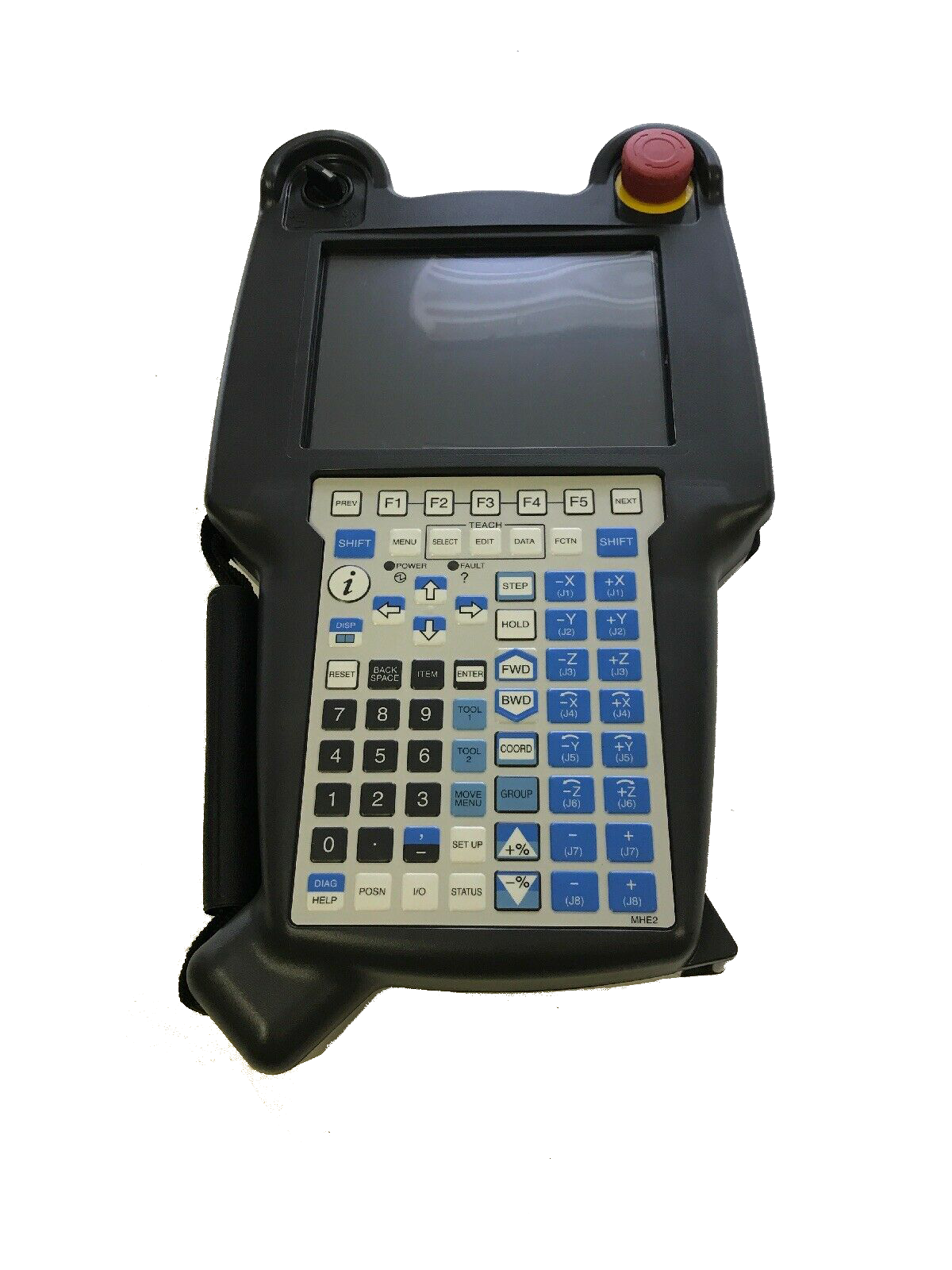
Yes, we provide hands-on training as part of the system handoff in Michigan. We educate your United States team on teach pendant navigation, alarm diagnostics, and servo replacement procedures, ensuring that your personnel possess the specific technical knowledge needed for operational self-sufficiency.
Can you integrate Ignition SCADA with robotic cells in Michigan?
We specialize in SCADA-to-Robot integration, using OPC UA or dedicated drivers to stream robot telemetry to Ignition. This allows for facility-wide visibility of Industrial Robotics Integration assets in Port Huron, enabling data-driven tracking of robot cycle times and preventive maintenance needs across United States.
What are the common protocols used for PLC-to-Robot communication in Port Huron?
We primarily utilize deterministic Ethernet protocols including EtherNet/IP, PROFINET, and EtherCAT. This ensures low-latency synchronization for high-speed Industrial Robotics Integration applications in Michigan, allowing the master PLC to manage robot state and interlock signals with millisecond precision.
Do you support remote troubleshooting for robotic systems in United States?
We deploy secure industrial VPN gateways for sites in Port Huron to provide real-time remote diagnostics. This allows our senior engineers to analyze robot error logs and motion logic in Michigan without the delay of on-site travel, significantly reducing response times for software-level issues.
How do you manage robot software version control for multi-robot lines in Port Huron?
We utilize structured repository management and change-control software to track every logic modification. For robotic facilities in Michigan, this prevents synchronization errors and provides an immutable audit trail of software changes, ensuring that all robotic assets across United States remain in a validated state.
Is regular mechanical maintenance required for industrial robots in Port Huron?
Robots require scheduled maintenance including grease analysis, battery replacements, and kinematic verification. We offer preventive maintenance plans in Michigan that follow manufacturer specs, ensuring that Industrial Robotics Integration assets in United States maintain their accuracy and reliability over tens of thousands of operational hours.
Can you provide custom drivers for specialized robotic end-effectors in Michigan?
Where standard libraries are unavailable, our engineers develop custom logic to manage specialized EOAT like ultrasonic welders or adaptive grippers. This ensures that unique process tools in Port Huron are accurately controlled and monitored by the primary robot controller across United States.
How is robot repeatability measured during commissioning in Port Huron?
We use precision measurement tools to verify the robot's ability to return to a specific point under load. For systems in Michigan, we document repeatability over multiple cycles, ensuring the Industrial Robotics Integration deployment meets the sub-millimeter requirements of your specific United States assembly process.
Related Resources
Navigation
Technical Foundations
Quantify Your Robotic Scope in Port Huron
Generic automation quotes lead to underscoped integration risks. Utilize our technical diagnostic to define your I/O magnitude, kinematic requirements, and safety performance levels before vendor introduction.
Begin Robotic Scope Diagnostic