Industrial Robot Modernization in Jeffersontown | Kentucky Services
For facilities in Jeffersontown, Kentucky looking to optimize material handling, LVH Systems provides turnkey Industrial Robotics Integration solutions focused on palletizing and high-speed sortation. Our engineering group in United States architects robotic systems that utilize decentralized I/O and EtherCAT motion backbones to coordinate hundreds of signals per second. We specialize in the integration of vision-guided robots for randomized pick-and-place, utilizing advanced algorithms for collision avoidance and path optimization. Our deployments in Kentucky prioritize operational uptime through redundant control architectures and predictive maintenance telemetry, ensuring that robotic cells function as high-performance nodes within the facility’s broader automation framework.
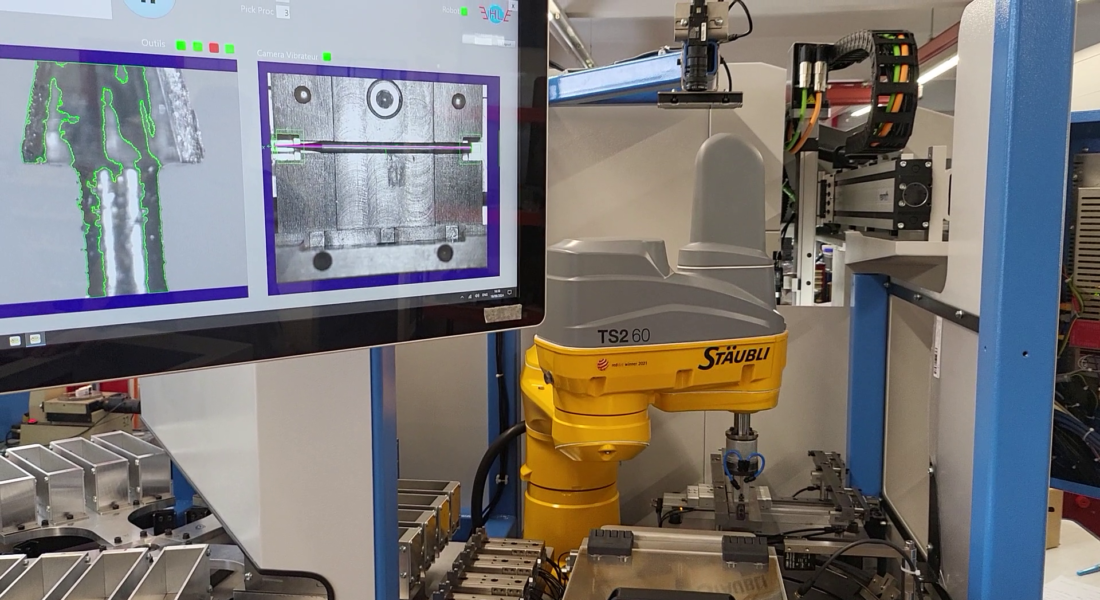
Vision-guided robotics (VGR) integration in Jeffersontown, Kentucky provides the technical flexibility required for randomized part handling and automated quality inspection. LVH Systems delivers specialized VGR solutions across United States, focusing on the marriage of high-speed industrial cameras with robotic kinematic control. The integration challenge lies in the calibration of the 'Camera-to-Robot' coordinate space, ensuring that the visual data is accurately translated into motion commands. Our engineering group in Kentucky utilizes advanced 2D and 3D vision algorithms to identify part orientation, scale, and surface defects, allowing the robot to adjust its approach path dynamically. We implement low-latency communication between the vision processor and the robot controller via Gigabit Ethernet or specialized industrial protocols. For facilities in Jeffersontown, we prioritize 'Visual Intel,' where the vision system not only guides the robot but also feeds data back to a centralized SCADA system for production analytics and traceability. We ensure that lighting environments are engineered for stability and that the vision logic accounts for variations in part color or ambient light. LVH Systems provides the technical clarity needed to deploy vision systems that reduce manual sorting and increase the intelligence of the robotic footprint.
Providing technical integration services to industrial facilities within the Jeffersontown metropolitan area and throughout Kentucky.
Technical content for Industrial Robotics Integration in Jeffersontown, Kentucky last validated on April 5, 2026.
Services
Collaborative Safety Assessment
We conduct rigorous risk assessments for collaborative robot (cobot) workstations in Jeffersontown. LVH Systems defines safe speed and force limits according to ISO/TS 15066, ensuring that collaborative Industrial Robotics Integration applications in Kentucky prioritize human safety while delivering the intended productivity gains for United States operators.
Safety PLC Logic Development
Our technical group develops safety-rated logic for robotic cells in Kentucky, managing emergency stops, door interlocks, and safe-speed zones. For facilities in Jeffersontown, we provide documented verification of safety performance levels (PLd/PLe), ensuring that the control system remains fundamentally deterministic and fault-tolerant.
Safe-Move & Speed Monitoring
We configure safety-rated software modules, such as FANUC Dual Check Safety (DCS) or KUKA SafeOperation, for systems in Jeffersontown. This ensures that robot motion in Kentucky is restricted to validated Cartesian zones and speeds, reducing the footprint of safety guarding while protecting equipment and personnel.
Redundant Safety Networking
LVH Systems implements safety-over-bus protocols like CIP Safety and Fail Safe over EtherCAT (FSoE) for robotic lines in Kentucky. This architecture ensures that safety-critical signals in Jeffersontown are transmitted with high integrity, allowing for centralized safety management across multi-robot United States installations.
Safety Validation Reporting
We provide comprehensive functional safety validation reports for every robotic integration in Jeffersontown. Our engineers document every safety test and calculation in Kentucky, providing facility owners in United States with the auditable proof of compliance required for regulatory and insurance standards.
Operator Safety Training
Technical training for Jeffersontown personnel focuses on the safe operation and recovery of robotic cells. We educate your Kentucky team on safety-rated bypasses, recovery procedures, and regular proof-testing requirements, ensuring that Industrial Robotics Integration maintenance in United States is performed according to strict safety protocols.
Our Process
ISO Risk Assessment
Identification of hazardous zones and interaction points within the Jeffersontown cell defines the required Performance Levels for all safety-related parts of the Industrial Robotics Integration control system in Kentucky.
Safety Logic Architecture
Development of dual-channel safety-rated logic within a dedicated safety PLC ensures that every emergency stop and gate switch is managed deterministically for your United States facility.
Safety Network Configuration
Configuring CIP Safety or FSoE protocols for the robotic cell in Jeffersontown provides high-integrity communication between the robot controller and safety I/O modules throughout the Kentucky facility.
Forced Fault Testing
Simulating internal and external hardware failures at the lab validates that the safety logic responds correctly, preventing dangerous states in Industrial Robotics Integration systems before they reach Jeffersontown.
Field Safety Validation
On-site testing of light curtains, area scanners, and safety-rated monitored stops in Kentucky confirms that the integrated safety system provides the required protection for personnel in Jeffersontown.
Validation Documentation
Preparation of the final validation report and SISTEMA calculations provides your United States facility with auditable proof that the robotic cell meets all international safety compliance standards.
Use Cases
Handling glowing-hot metal castings in a foundry environment requires robots with specialized cooling systems and heat-shielding. We deploy 6-axis robots with water-cooled jackets and thermal-resistant EOAT. The control logic is managed via a hardened PLC using a fiber-optic ring network to resist extreme EMI. The technical objective is to automate the dangerous manual task of gate-grinding and sand-mold extraction, ensuring consistent part finishing in an environment that is otherwise uninhabitable for human operators.
High-speed PCB assembly and part insertion require micro-precision and rapid cycle times. We integrate ultra-fast SCARA robots using real-time motion control loops triggered by high-speed laser edge-detection sensors. This control strategy compensates for board-to-board placement variations at microsecond intervals. The technical objective is to achieve a cycle time of 0.4 seconds per insertion while maintaining a placement accuracy of +/- 0.01mm, ensuring high-yield production of dense electronic assemblies in a high-volume manufacturing facility.
Assembling complex instrument clusters in Tier 1 automotive facilities involves multi-part picking and screw-driving. We integrate collaborative robots with automated screw-feeders and torque-sensing drivers. The control strategy uses a safety PLC to manage safe-limited speed zones, allowing humans to replenish part bins without stopping the robot. This orchestration increases the cycle time efficiency of the assembly station by 30% while ensuring every screw is driven to the exact torque specification for automotive quality validation.
Technical Capabilities
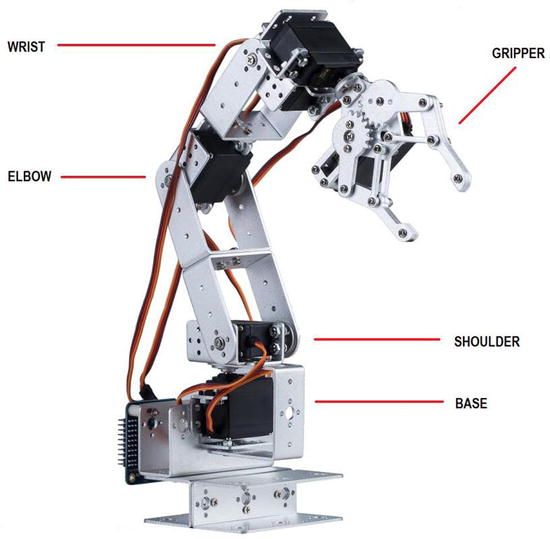
- A kinematic chain is the sequence of joints and links that connect the robot base to the tool-center-point for motion calculation.
- Robot controllers utilize look-ahead algorithms to calculate the optimal velocity profile for the upcoming segments of a motion path.
- SIL 3 safety integrity level requires a probability of dangerous failure per hour between 10^-8 and 10^-7 for safety-related control functions.
- Robot reachability studies identify areas of the workspace where joint limits or singularities prevent the robot from reaching target orientations.
- Force-mode control allows a robot to maintain a constant pressure against a surface, which is critical for grinding, polishing, and deburring.
- Industrial PCs running real-time operating systems can function as soft-robot-controllers, providing high flexibility for custom kinematic applications.
- Safe Torque Off (STO) is a basic safety function that removes power from the motor without disconnecting the drive from the main supply.
- The center of mass for a robot tool impacts the rotational inertia seen by the wrist joints, affecting the robot's maximum allowable acceleration.
- OPC UA PubSub enables high-efficiency data exchange for large robotic fleets by utilizing a publisher-subscriber model over UDP or MQTT.
- Safety-rated soft-axis limits provide a software-based alternative to physical hard stops for restricting a robot's range of motion.
High-payload palletizing solutions for Industrial Robotics Integration facilities.
A four-axis heavy-duty palletizing robot utilizing a vacuum-head end-effector to stack units with high repeatability. The control logic manages complex pattern generation and acceleration profiles to ensure pallet stability during high-volume logistics operations.
Deterministic network architecture supporting Industrial Robotics Integration.
A network rack containing managed industrial switches and EtherCAT I/O modules. This architecture serves as the deterministic backbone for robotic motion control, ensuring that all field signals and controller packets arrive with microsecond timing accuracy.
Frequently Asked Questions
What is 'Jerk-Limited' motion, and why is it important for Jeffersontown robots?
Jerk-limited motion uses S-curve acceleration to minimize the rate of change of acceleration. For systems in Kentucky, this reduces mechanical vibration and wear on gearboxes, allowing for faster smooth motion and longer mechanical lifespans for robotic units throughout United States.
How is kinematic singularity avoidance managed in robot logic in Kentucky?
We utilize path simulation in Jeffersontown to identify singularity points—where joint alignments cause loss of control degrees of freedom. By programming joint-space moves or adjusting toolpaths in Kentucky, we ensure the robot operates with continuous, predictable motion during complex tasks.
Can you synchronize robotic motion with an external conveyor in Jeffersontown?
Yes, we implement 'Conveyor Tracking' logic using external encoder feedback. This allows the robot in Kentucky to dynamically adjust its tool-center-point to follow a moving part, ensuring precision handling in United States applications without stopping the production line.
Does LVH Systems support 7-axis robotics or linear rail integration in United States?
Yes, we integrate additional degrees of freedom, such as robots mounted on linear tracks or rotary positioners. For projects in Jeffersontown, we develop the coordinated motion logic that treats the rail as an integrated 7th axis, expanding the robot's work envelope across your Kentucky facility.
What is the importance of 'Tool Center Point' (TCP) calibration in Jeffersontown?
TCP calibration ensures the robot knows the exact location of its working tool in 3D space. Accurate calibration in Kentucky is essential for sub-millimeter precision in assembly or dispensing, ensuring consistent quality for all Industrial Robotics Integration processes in United States.
How are robot payload limits calculated for facilities in Kentucky?
We calculate payload based on tool weight, part weight, and the center of gravity offset from the robot flange. For Jeffersontown installations, we also factor in dynamic inertia during high-speed moves to ensure the robot operates within its mechanical stress limits throughout United States.
Do you integrate force-torque sensors for tactile robotic assembly in Jeffersontown?
Yes, we use force-torque sensors to provide the robot with 'haptic' feedback. This allows the controller in Kentucky to adjust its force in real-time for tasks like part insertion or deburring, achieving human-like sensitivity in automated United States assembly environments.
What is the typical update rate for a high-performance robotic servo loop in Jeffersontown?
Modern controllers operate at update rates of 1ms to 4ms for internal servo loops. For high-speed applications in Kentucky, we utilize deterministic networking to ensure that external sensor data is processed at the same frequency, maintaining the stability of the entire motion system.
Related Resources
Navigation
Technical Foundations
Quantify Your Robotic Scope in Jeffersontown
Generic automation quotes lead to underscoped integration risks. Utilize our technical diagnostic to define your I/O magnitude, kinematic requirements, and safety performance levels before vendor introduction.
Begin Robotic Scope Diagnostic