Technical Industrial Robotics Integration Hub: Naawan, Misamis Oriental
LVH Systems provides specialized Industrial Robotics Integration for brownfield modernization projects in Naawan, Misamis Oriental. We manage the complex process of retrofitting legacy production lines with modern robotic cells, utilizing hardware bridging and logic translation to ensure seamless communication with existing PLC infrastructure throughout Philippines. Our technical team focuseses on upgrading robot controllers and servo drives while maintaining the mechanical integrity of the production environment. For industrial sites in Misamis Oriental, we deliver logic-first integration that prioritizes functional safety and diagnostic transparency, enabling facility technicians to maintain modern robotic assets with the same precision as greenfield installations.
The integration of collaborative robots (cobots) in Naawan, Misamis Oriental introduces a unique set of engineering requirements focused on power and force limiting (PFL) and human-robot interaction. LVH Systems provides professional cobot integration across Philippines, moving beyond simple installation to architect fully compliant collaborative workstations. Unlike traditional industrial robots, cobots require a rigorous risk assessment to define the maximum safe speeds and forces for every kinematic move. Our technical group in Misamis Oriental specializes in the programming of these 'Safe Zones' and the integration of force-torque sensors that detect human contact. We focus on making collaborative systems maintainable by using intuitive HMI blocks that allow plant personnel to perform basic teaching tasks while keeping the core safety logic protected. For projects in Naawan, we implement 'Integrated Safety,' where the cobot is linked to a safety-rated PLC to manage auxiliary equipment like conveyors or presses. We ensure that all collaborative integrations adhere to ISO/TS 15066 technical specifications, providing documented validation of force limits. LVH Systems enables facilities to bridge the gap between manual labor and full automation, delivering collaborative systems that are both productive and fundamentally safe.
Providing technical integration services to industrial facilities within the Naawan metropolitan area and throughout Misamis Oriental.
Technical content for Industrial Robotics Integration in Naawan, Misamis Oriental last validated on April 5, 2026.
Services
Vision-Guided Kinematics
We integrate 2D and 3D vision systems to guide robotic kinematics in Naawan. LVH Systems develops high-speed calibration routines that allow robot controllers in Misamis Oriental to identify and handle randomized parts on moving conveyors with sub-millimeter precision for high-volume Philippines assembly lines.
Multi-Axis Servo Tuning
Our engineers perform precision servo tuning to optimize acceleration and deceleration curves for robots in Misamis Oriental. By reducing mechanical vibration and overshoot in Naawan, we improve the cycle times of Industrial Robotics Integration systems and significantly extend the life of high-precision gearboxes and motors.
End-of-Arm Tooling Design
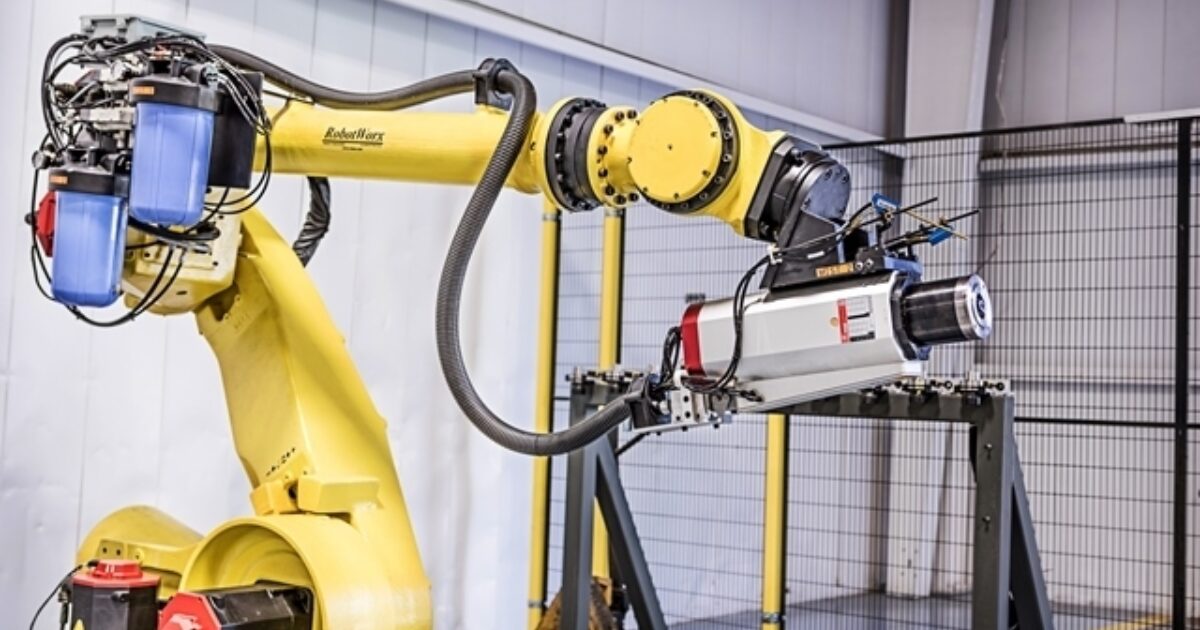
We engineer specialized end-of-arm tooling (EOAT) using lightweight materials and integrated sensors for projects in Naawan. Our designs for Misamis Oriental facilities prioritize high-speed actuation and reliable part grip, ensuring that robotic motion is perfectly matched to the specific handling requirements of Philippines processes.
Deterministic Sync Logic
LVH Systems develops master sync logic that allows robot motion to be slaved to external encoders or conveyors in Naawan. This ensures that Industrial Robotics Integration operations in Misamis Oriental remain perfectly synchronized with varying line speeds, preventing product damage and ensuring consistent quality throughout Philippines.
High-Fidelity Path Simulation
We utilize advanced simulation software to validate robotic pathing and collision avoidance for Naawan facilities. This technical step in Misamis Oriental allows for the optimization of multi-robot coordinated motion before hardware deployment, ensuring that Philippines production starts with the highest possible throughput.
Force-Torque Integration
Our group integrates high-resolution force-torque sensors for precision robotic assembly in Naawan. By providing the controller with tactile feedback in Misamis Oriental, we enable robots to perform delicate tasks like part insertion or surface finishing with a high degree of sensitivity and repeatability.
Our Process
Baseline Servo Audit
Measuring current torque profiles and mechanical vibration in Naawan establishes the performance baseline for existing robotic motion routines before optimization work begins in Misamis Oriental.
Kinematic Calibration
Recalibrating the tool-center-point and coordinate frames for the Naawan robot ensures that motion commands are translated into physical movement with the highest degree of sub-millimeter accuracy.
S-Curve Optimization
Applying jerk-limited S-curve motion profiles to the robot logic reduces mechanical stress on gearboxes, allowing for faster cycle times in Misamis Oriental without increasing wear on Industrial Robotics Integration assets.
Loop Response Tuning
Adjusting the PID gains on the robotic servo drives in Naawan improves the system's response to load changes, ensuring stable and repeatable motion for high-precision Philippines assembly.
Deterministic Comms Audit
Analyzing EtherCAT or PROFINET timing ensures that motion data packets in Misamis Oriental are arriving within the fixed time window required for perfect multi-axis synchronization in Naawan.
Efficiency Benchmarking
Analyzing post-optimization process metrics confirms the cycle-time reductions and energy-efficiency gains for your Philippines industrial operation, validating the ROI of the motion tuning project.
Use Cases
Automated munitions handling in secure defense facilities requires robotic systems built for absolute logic integrity and auditability. We implement a hardened 6-axis robot cell with a dedicated safety PLC and air-gapped network architecture. The control logic manages the precision movement of high-explosive components, utilizing dual-channel safety-rated position feedback. This strategy ensures that every robotic move is verified against a validated safety-state map, mitigating the risk of mechanical anomalies in a high-consequence operational environment.
Handling glowing-hot metal castings in a foundry environment requires robots with specialized cooling systems and heat-shielding. We deploy 6-axis robots with water-cooled jackets and thermal-resistant EOAT. The control logic is managed via a hardened PLC using a fiber-optic ring network to resist extreme EMI. The technical objective is to automate the dangerous manual task of gate-grinding and sand-mold extraction, ensuring consistent part finishing in an environment that is otherwise uninhabitable for human operators.
Robotic deburring of large engine castings in heavy manufacturing involves managing high-vibration tool loads and varying surface finishes. We implement a force-torque sensing strategy on a high-payload robot arm, allowing the controller to maintain a constant tool pressure against the casting surface regardless of path deviation. This deterministic control loop adjusts the kinematic speed to maintain consistent material removal rates. The technical objective is to automate a hazardous manual task, ensuring uniform part quality and reducing the cycle time of the finishing process by 40%.
Technical Capabilities
- Collision detection sensitivity must be tuned to prevent nuisance trips while ensuring the robot stops quickly during actual mechanical interference.
- Robot payload inertia is a measure of how the tool's mass distribution resists changes in rotational speed across the robot's wrist axes.
- Dynamic path planning allows robots to reroute motion in real-time to avoid obstacles detected by vision or proximity sensors.
- Safety-instrumented functions (SIF) must be proof-tested regularly to verify they still meet the required safety integrity level defined during design.
- The kinematic singularity at the robot's wrist, often called the 'overhead singularity,' occurs when joints 4 and 6 become co-axial.
- IO-Link communication for robot end-effectors allows for the transmission of diagnostic data and parameter settings to sensors via a standard cable.
- Functional safety validation for robotics includes measuring the stopping distance of the robot under maximum load and speed conditions.
- High-speed delta robots utilize carbon-fiber arms to reduce inertia and achieve accelerations exceeding 10G in packaging applications.
- Absolute encoders utilize multi-turn tracking to maintain position data through battery-backed memory or non-volatile electronic registers.
- Robot master logic in a PLC should be architected using state-machine principles to ensure predictable transitions between operational modes.
Deterministic network architecture supporting Industrial Robotics Integration.
A network rack containing managed industrial switches and EtherCAT I/O modules. This architecture serves as the deterministic backbone for robotic motion control, ensuring that all field signals and controller packets arrive with microsecond timing accuracy.
Specialized EOAT design for Industrial Robotics Integration applications.
A close-up view of a custom-engineered end-effector incorporating pneumatic actuators, vacuum grippers, and proximity sensors. The tooling is optimized for low-mass dynamics, allowing the robot to achieve high-speed part handling with absolute reliability.
Frequently Asked Questions
Do you provide on-site training for our robotics maintenance team in Naawan?
Yes, we provide hands-on training as part of the system handoff in Misamis Oriental. We educate your Philippines team on teach pendant navigation, alarm diagnostics, and servo replacement procedures, ensuring that your personnel possess the specific technical knowledge needed for operational self-sufficiency.
Can you integrate Ignition SCADA with robotic cells in Misamis Oriental?
We specialize in SCADA-to-Robot integration, using OPC UA or dedicated drivers to stream robot telemetry to Ignition. This allows for facility-wide visibility of Industrial Robotics Integration assets in Naawan, enabling data-driven tracking of robot cycle times and preventive maintenance needs across Philippines.
What are the common protocols used for PLC-to-Robot communication in Naawan?
We primarily utilize deterministic Ethernet protocols including EtherNet/IP, PROFINET, and EtherCAT. This ensures low-latency synchronization for high-speed Industrial Robotics Integration applications in Misamis Oriental, allowing the master PLC to manage robot state and interlock signals with millisecond precision.
Do you support remote troubleshooting for robotic systems in Philippines?
We deploy secure industrial VPN gateways for sites in Naawan to provide real-time remote diagnostics. This allows our senior engineers to analyze robot error logs and motion logic in Misamis Oriental without the delay of on-site travel, significantly reducing response times for software-level issues.
How do you manage robot software version control for multi-robot lines in Naawan?
We utilize structured repository management and change-control software to track every logic modification. For robotic facilities in Misamis Oriental, this prevents synchronization errors and provides an immutable audit trail of software changes, ensuring that all robotic assets across Philippines remain in a validated state.
Is regular mechanical maintenance required for industrial robots in Naawan?
Robots require scheduled maintenance including grease analysis, battery replacements, and kinematic verification. We offer preventive maintenance plans in Misamis Oriental that follow manufacturer specs, ensuring that Industrial Robotics Integration assets in Philippines maintain their accuracy and reliability over tens of thousands of operational hours.
Can you provide custom drivers for specialized robotic end-effectors in Misamis Oriental?
Where standard libraries are unavailable, our engineers develop custom logic to manage specialized EOAT like ultrasonic welders or adaptive grippers. This ensures that unique process tools in Naawan are accurately controlled and monitored by the primary robot controller across Philippines.
How is robot repeatability measured during commissioning in Naawan?
We use precision measurement tools to verify the robot's ability to return to a specific point under load. For systems in Misamis Oriental, we document repeatability over multiple cycles, ensuring the Industrial Robotics Integration deployment meets the sub-millimeter requirements of your specific Philippines assembly process.
Related Resources
Navigation
Technical Foundations
Quantify Your Robotic Scope in Naawan
Generic automation quotes lead to underscoped integration risks. Utilize our technical diagnostic to define your I/O magnitude, kinematic requirements, and safety performance levels before vendor introduction.
Begin Robotic Scope Diagnostic