Technical Industrial Robotics Integration Hub: Palikir, Pohnpei
LVH Systems provides specialized Industrial Robotics Integration in Palikir, Pohnpei, delivering engineering-led solutions for the synchronization of multi-axis robotic arms with centralized PLC architectures. Our technical group in Micronesia, Federated States of manages deterministic motion control via EtherCAT and PROFINET, ensuring sub-millisecond coordination between robot controllers, servo drives, and field sensors. We focus on integrating Tier-1 platforms like FANUC, ABB, and KUKA, incorporating high-speed vision systems for precision pick-and-place and force-torque sensors for complex assembly. By architecting safety-rated control enclosures and validating logic according to ISO 10218 standards, we mitigate operational risks for industrial facilities across Pohnpei.
Industrial robotics integration within the automotive sector in Palikir, Pohnpei demands extreme technical rigor due to high payload dynamics and the necessity for sub-millimeter precision in body-in-white and assembly processes. LVH Systems delivers specialized engineering for automotive robotic cells across Micronesia, Federated States of, focusing on the synchronization of multi-axis arms for spot welding, structural bonding, and high-speed part transfer. The integration of these systems requires a fundamental understanding of kinematic chains and the management of high-inertia motion profiles. Our technical group architects these cells using safety-rated safety PLCs and deterministic EtherCAT backbones to coordinate motion between the robot controller and auxiliary equipment like rotary tables or transfer shuttles. In the automotive vertical, downtime is cost-prohibitive, making the logic lifecycle critical. We focus on developing modular, documented code that allows for rapid diagnostic response and modular maintenance. By implementing collision avoidance algorithms and jerk-limited motion trajectories, we extend the operational life of robotic mechanical units while maintaining the aggressive cycle times required by modern assembly lines in Pohnpei. From initial reach studies and cycle-time simulation to on-site commissioning and final safety validation according to ISO 10218, LVH Systems provides the technical backbone needed for high-stakes automotive integration.
Providing technical integration services to industrial facilities within the Palikir metropolitan area and throughout Pohnpei.
Technical content for Industrial Robotics Integration in Palikir, Pohnpei last validated on April 5, 2026.
Services
Robotic Cell Engineering
LVH Systems provides comprehensive 3D reach studies and kinematic simulation for robotic cells in Palikir. We optimize floor space utilization and cycle times in Pohnpei, ensuring that every mechanical move is validated for efficiency and hardware-limited safety before physical installation commences throughout Micronesia, Federated States of.
Controller Logic Programming
Our engineers develop custom motion logic for FANUC, ABB, and KUKA controllers in Palikir. We focus on creating modular, well-commented code that handles multi-axis coordination and error recovery, providing Industrial Robotics Integration operators in Pohnpei with a transparent and maintainable control layer for complex industrial processes.
Functional Safety Integration
We implement safety-instrumented systems for robotics in Pohnpei, adhering to ISO 10218 and ISO 13849 standards. By integrating SIL-rated safety PLCs, light curtains, and safety-rated monitored stops, we protect personnel in Palikir while maintaining the required operational uptime for high-performance Micronesia, Federated States of facilities.
Deterministic OT Networking
LVH Systems architects low-latency industrial networks using EtherCAT and PROFINET to synchronize robot controllers with plant PLCs in Palikir. Our network designs for Pohnpei ensure sub-millisecond data exchange, allowing for real-time motion adjustment and high-fidelity telemetry across the entire robotic infrastructure.
Field Commissioning & SAT
Our group performs exhaustive on-site Site Acceptance Testing (SAT) for robotic installations in Palikir. We perform I/O validation, tool-center-point calibration, and payload verification in Pohnpei, ensuring that the integrated system meets every functional requirement before the final handoff in Micronesia, Federated States of.
Robotic Lifecycle Support
We offer post-commissioning technical support and maintenance audits for robotic cells in Palikir. From logic optimizations to servo tuning and grease analysis, we ensure that Industrial Robotics Integration assets across Pohnpei continue to operate with high availability and precision throughout their multi-year lifecycle.
Our Process
Technical Audit
Mapping existing infrastructure and reach requirements in Palikir allows for an accurate definition of the project scope and hardware constraints before any Industrial Robotics Integration design work commences in Pohnpei.
Reach & Cycle Simulation
3D modeling of kinematic paths and cycle-time analysis ensures the robotic cell meets your Palikir facility throughput goals while avoiding mechanical singularities or collisions during operation in Pohnpei.
Electrical & Logic Design
Engineering of the robot control enclosure and the development of modular PLC-to-Robot logic occurs according to IEC standards, prioritizing maintainability for technical teams across Micronesia, Federated States of.
Panel & EOAT Fabrication
Assembly of the control cabinet and specialized end-of-arm tooling in Palikir emphasizes professional wiring and robust mechanical integration, ensuring long-term reliability for your Industrial Robotics Integration project.
Factory Acceptance (FAT)
Comprehensive simulation and testing of the robot logic against simulated field devices validates the system performance before it leaves the lab, reducing the risk of downtime during Palikir commissioning.
On-Site Installation
Physical mounting and field wiring of the robotic cell at your Pohnpei facility involves rigorous grounding and cable management to protect high-speed communication signals from industrial interference.
Site Commissioning (SAT)
On-site loop checks, tool calibration, and final performance tuning ensure the integrated Industrial Robotics Integration system operates correctly under real production conditions at your project site in Palikir.
Handoff & Documentation
Delivery of uncompiled source logic, reach studies, and redline schematics ensures your Pohnpei facility maintains total technical ownership and self-sufficiency for the integrated robotic assets.
Use Cases
Automated munitions handling in secure defense facilities requires robotic systems built for absolute logic integrity and auditability. We implement a hardened 6-axis robot cell with a dedicated safety PLC and air-gapped network architecture. The control logic manages the precision movement of high-explosive components, utilizing dual-channel safety-rated position feedback. This strategy ensures that every robotic move is verified against a validated safety-state map, mitigating the risk of mechanical anomalies in a high-consequence operational environment.
Handling glowing-hot metal castings in a foundry environment requires robots with specialized cooling systems and heat-shielding. We deploy 6-axis robots with water-cooled jackets and thermal-resistant EOAT. The control logic is managed via a hardened PLC using a fiber-optic ring network to resist extreme EMI. The technical objective is to automate the dangerous manual task of gate-grinding and sand-mold extraction, ensuring consistent part finishing in an environment that is otherwise uninhabitable for human operators.
Robotic deburring of large engine castings in heavy manufacturing involves managing high-vibration tool loads and varying surface finishes. We implement a force-torque sensing strategy on a high-payload robot arm, allowing the controller to maintain a constant tool pressure against the casting surface regardless of path deviation. This deterministic control loop adjusts the kinematic speed to maintain consistent material removal rates. The technical objective is to automate a hazardous manual task, ensuring uniform part quality and reducing the cycle time of the finishing process by 40%.
Technical Capabilities
- Hardware-in-the-loop (HIL) simulation verifies robot-to-PLC communication and logic response using physical controllers and simulated mechanical models.
- The Tool Center Point (TCP) speed is the linear velocity of the tool tip, which must be carefully monitored during human-robot collaborative tasks.
- Distributed I/O modules on the robot arm reduce the moving cable mass and simplify the integration of sensors and actuators on the EOAT.
- Robot accuracy is the measure of the robot's ability to move to a set of programmed coordinates within the work envelope for the first time.
- Multi-axis motion coordination requires all axes to share a common time-base to ensure they reach their target positions simultaneously.
- Safety door interlocks with locking solenoids prevent access to a robotic cell until the robot has reached a safe-rated monitored stop.
- Vacuum-flow sensors on end-effectors provide positive feedback of part capture, allowing the robot to proceed with the motion sequence safely.
- A kinematic chain is the sequence of joints and links that connect the robot base to the tool-center-point for motion calculation.
- Robot controllers utilize look-ahead algorithms to calculate the optimal velocity profile for the upcoming segments of a motion path.
- SIL 3 safety integrity level requires a probability of dangerous failure per hour between 10^-8 and 10^-7 for safety-related control functions.
Certified safety zoning and functional safety for Industrial Robotics Integration.
Industrial safety guarding for a robotic workstation incorporating hard fencing and multi-beam light curtains. The setup is linked to a safety PLC, providing validated safety performance levels that protect personnel while enabling rapid system restarts.
Scalable multi-robot orchestration for Industrial Robotics Integration production.
A panoramic view of a modern manufacturing facility showing a series of integrated robotic cells. Each cell functions as an intelligent node within a facility-wide deterministic network, synchronized for high-volume automated production.
Frequently Asked Questions
Do you provide on-site training for our robotics maintenance team in Palikir?
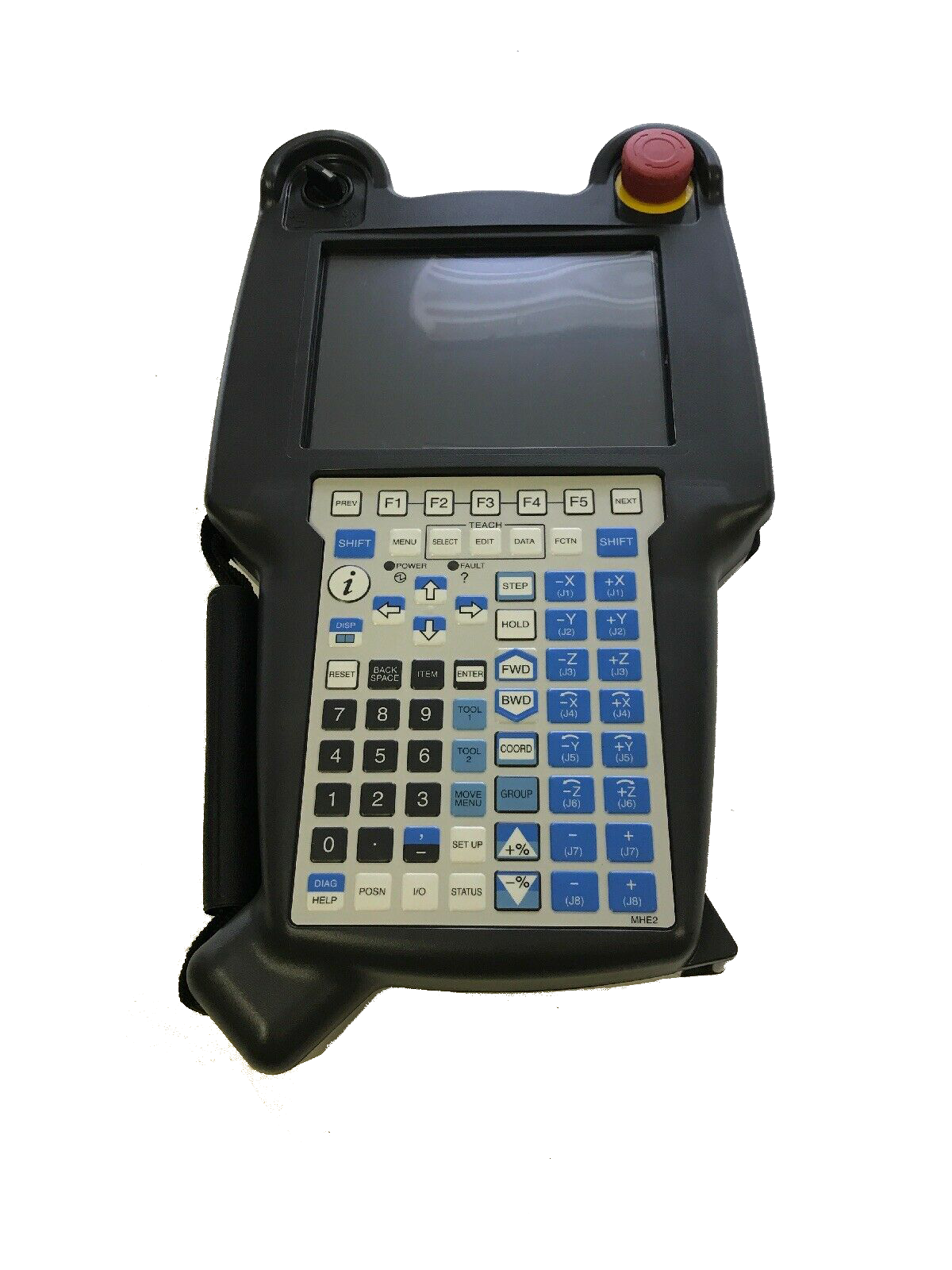
Yes, we provide hands-on training as part of the system handoff in Pohnpei. We educate your Micronesia, Federated States of team on teach pendant navigation, alarm diagnostics, and servo replacement procedures, ensuring that your personnel possess the specific technical knowledge needed for operational self-sufficiency.
Can you integrate Ignition SCADA with robotic cells in Pohnpei?
We specialize in SCADA-to-Robot integration, using OPC UA or dedicated drivers to stream robot telemetry to Ignition. This allows for facility-wide visibility of Industrial Robotics Integration assets in Palikir, enabling data-driven tracking of robot cycle times and preventive maintenance needs across Micronesia, Federated States of.
What are the common protocols used for PLC-to-Robot communication in Palikir?
We primarily utilize deterministic Ethernet protocols including EtherNet/IP, PROFINET, and EtherCAT. This ensures low-latency synchronization for high-speed Industrial Robotics Integration applications in Pohnpei, allowing the master PLC to manage robot state and interlock signals with millisecond precision.
Do you support remote troubleshooting for robotic systems in Micronesia, Federated States of?
We deploy secure industrial VPN gateways for sites in Palikir to provide real-time remote diagnostics. This allows our senior engineers to analyze robot error logs and motion logic in Pohnpei without the delay of on-site travel, significantly reducing response times for software-level issues.
How do you manage robot software version control for multi-robot lines in Palikir?
We utilize structured repository management and change-control software to track every logic modification. For robotic facilities in Pohnpei, this prevents synchronization errors and provides an immutable audit trail of software changes, ensuring that all robotic assets across Micronesia, Federated States of remain in a validated state.
Is regular mechanical maintenance required for industrial robots in Palikir?
Robots require scheduled maintenance including grease analysis, battery replacements, and kinematic verification. We offer preventive maintenance plans in Pohnpei that follow manufacturer specs, ensuring that Industrial Robotics Integration assets in Micronesia, Federated States of maintain their accuracy and reliability over tens of thousands of operational hours.
Can you provide custom drivers for specialized robotic end-effectors in Pohnpei?
Where standard libraries are unavailable, our engineers develop custom logic to manage specialized EOAT like ultrasonic welders or adaptive grippers. This ensures that unique process tools in Palikir are accurately controlled and monitored by the primary robot controller across Micronesia, Federated States of.
How is robot repeatability measured during commissioning in Palikir?
We use precision measurement tools to verify the robot's ability to return to a specific point under load. For systems in Pohnpei, we document repeatability over multiple cycles, ensuring the Industrial Robotics Integration deployment meets the sub-millimeter requirements of your specific Micronesia, Federated States of assembly process.
Related Resources
Technical Foundations
Quantify Your Robotic Scope in Palikir
Generic automation quotes lead to underscoped integration risks. Utilize our technical diagnostic to define your I/O magnitude, kinematic requirements, and safety performance levels before vendor introduction.
Begin Robotic Scope Diagnostic