Industrial Robotics Integration & Engineering Services | Tepexi de Rodríguez, Puebla
In Tepexi de Rodríguez, Puebla, LVH Systems delivers engineering-led Industrial Robotics Integration focused on precision motion synchronization and multi-axis coordination. We specialize in the design of integrated robotic workstations that incorporate 6-axis arms, high-speed delta robots, and SCARA systems for electronics and pharmaceutical assembly across Mexico. Our group utilizes deterministic networking and real-time controller updates to manage complex kinematic chains with sub-millimeter repeatability. By validating every motion profile against mechanical stress limits and safety performance levels, we protect the investment of industrial operators in Puebla, providing the technical clarity needed to manage the entire robotics lifecycle.
Multi-robot orchestration in Tepexi de Rodríguez, Puebla represents the highest level of industrial systems integration, where multiple mechanical units must function as a single, synchronized system. LVH Systems delivers complex multi-robot architectures across Mexico, focusing on the technical coordination of kinematic paths to prevent collisions in shared workspaces. The integration scope involves the development of 'Master Logic' within a high-performance PLC that manages the state of each individual robot controller. We utilize deterministic networking via EtherCAT and PROFINET to ensure that all robots share a common time-base for coordinated motion, such as dual-arm assembly or synchronized transfer operations. Our engineering group in Puebla utilizes sophisticated simulation tools to model the multi-robot environment, identifying potential bottlenecks and path conflicts before a single hardware component is installed in Tepexi de Rodríguez. We focus on 'Protocol Uniformity,' ensuring that disparate robot brands can communicate seamlessly through standardized data structures. This level of orchestration maximizes throughput by allowing robots to work in close proximity with millisecond timing. LVH Systems provides the technical rigor needed to manage these complex environments, ensuring that multi-robot systems are reliable, auditable, and scalable.
Providing technical integration services to industrial facilities within the Tepexi de Rodríguez metropolitan area and throughout Puebla.
Technical content for Industrial Robotics Integration in Tepexi de Rodríguez, Puebla last validated on April 5, 2026.
Services
Legacy Controller Migration
We manage the replacement of obsolete robot controllers with modern, supported platforms for industrial sites in Tepexi de Rodríguez. LVH Systems develops hardware bridges to allow modern Industrial Robotics Integration controllers in Puebla to communicate with legacy mechanical units, restoring spare-parts availability across Mexico.
Logic & Program Conversion
Our engineers perform forensic code extraction and conversion from aging robotic systems in Tepexi de Rodríguez. We translate legacy motion routines into modern programming structures for Puebla facilities, improving diagnostic transparency and allowing for the integration of new Industrial Robotics Integration features like IIoT telemetry.
Robotic Servo Modernization
We specify and commission modern servo drives for existing robotic mechanical frames in Puebla. By upgrading the drive layer in Tepexi de Rodríguez, we improve the motion precision and energy efficiency of aging Industrial Robotics Integration assets, extending their operational life within your Mexico facility.
Fieldbus Protocol Bridging
LVH Systems implements protocol converters to link legacy robotic networks like DeviceNet or Profibus to modern EtherNet/IP backbones in Tepexi de Rodríguez. This allows for plant-wide data transparency in Puebla, enabling legacy robots to share production metrics with modern enterprise systems across Mexico.
Robot Performance Benchmarking
We perform technical audits of existing robotic installations in Tepexi de Rodríguez to identify mechanical wear and logic bottlenecks. Our group delivers a prioritized roadmap for Puebla facility modernization, ensuring that Industrial Robotics Integration investments in Mexico are focused on maximum ROI and reliability.
Safety Retrofitting & Validation
We upgrade the safety systems of legacy robotic cells in Tepexi de Rodríguez to meet current ISO 10218 standards. By adding modern safety PLCs and light curtains in Puebla, we bring aging Industrial Robotics Integration assets into compliance, protecting your Mexico personnel while enabling collaborative operational modes.
Our Process
Obsolescence Audit
Evaluating the manufacturer support status of aging robot controllers in Tepexi de Rodríguez identifies the critical hardware risks that threaten production continuity for your facility in Puebla.
Forensic Program Extraction
Capturing legacy motion routines and coordinate data from obsolete Industrial Robotics Integration systems in Tepexi de Rodríguez provides the logic foundation needed for a safe and accurate modern migration.
Controller Bridge Setup
Installing temporary communication gateways allows modern Industrial Robotics Integration logic to interface with legacy field devices in Puebla, facilitating a phased modernization of the Mexico production line.
Logic Lifecycle Translation
Translating legacy robot code into modern, modular programming structures ensures that Industrial Robotics Integration assets in Tepexi de Rodríguez are easier to diagnose and maintain for the next generation of technicians.
Parallel Validation
Running the new control logic in shadow-mode alongside the legacy system in Puebla allows for a direct comparison of kinematic behavior before any physical cutover occurs in Tepexi de Rodríguez.
Controlled Site Cutover
Migrating the robotic cell in stages minimizes unplanned downtime in Tepexi de Rodríguez, ensuring that production in Puebla continues while individual units are transitioned to the new control architecture.
Use Cases
Loading and unloading wafer FOUPs (Front Opening Unified Pods) in high-purity fabs requires robots with zero particulate generation. We integrate high-speed atmospheric transfer robots using magnetic coupling and sealed joint technology. The control logic utilizes nanosecond-accurate motion paths to prevent pods from experiencing high-G acceleration. This strategy maintains ISO 1 cleanliness standards while ensuring that valuable semiconductor loads are transferred between processing tools with zero mechanical risk or environmental contamination.
End-of-line palletizing in large distribution centers faces the challenge of managing multi-sku shipments with varying box sizes and weights. We integrate high-payload 4-axis palletizing robots with custom pattern-generation logic running on a central PLC. This architecture enables the robotic cell to dynamically adjust acceleration profiles and patterns based on real-time SKU data from the WMS. The technical objective is to maintain a continuous throughput of 1,200 cases per hour while ensuring pallet stability through precise pattern interlocking and vacuum-flow verification.
Assembling high-precision medical instruments requires delicate handling and validated process control. We deploy collaborative robots integrated with high-precision electric grippers and force-feedback sensors. The logic manages the insertion of sub-millimeter components, using force-monitoring to detect and reject misaligned parts instantly. This strategy ensures 100% assembly validation and provides an auditable record of the insertion force for every device, satisfying FDA quality standards while increasing the throughput of the sterile assembly cell.
Technical Capabilities
- Robot accuracy is the measure of the robot's ability to move to a set of programmed coordinates within the work envelope for the first time.
- Multi-axis motion coordination requires all axes to share a common time-base to ensure they reach their target positions simultaneously.
- Safety door interlocks with locking solenoids prevent access to a robotic cell until the robot has reached a safe-rated monitored stop.
- Vacuum-flow sensors on end-effectors provide positive feedback of part capture, allowing the robot to proceed with the motion sequence safely.
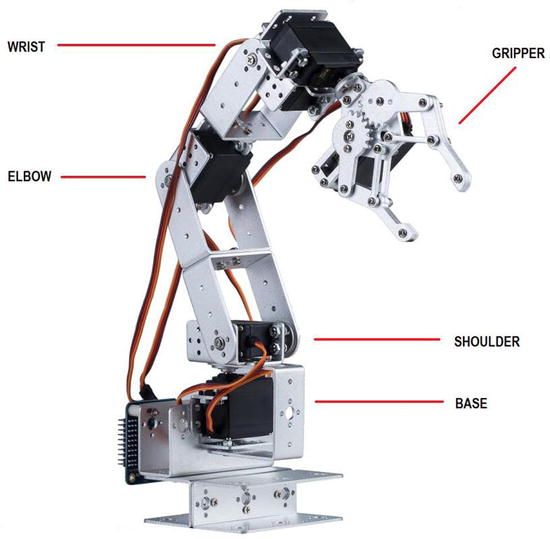
- A kinematic chain is the sequence of joints and links that connect the robot base to the tool-center-point for motion calculation.
- Robot controllers utilize look-ahead algorithms to calculate the optimal velocity profile for the upcoming segments of a motion path.
- SIL 3 safety integrity level requires a probability of dangerous failure per hour between 10^-8 and 10^-7 for safety-related control functions.
- Robot reachability studies identify areas of the workspace where joint limits or singularities prevent the robot from reaching target orientations.
- Force-mode control allows a robot to maintain a constant pressure against a surface, which is critical for grinding, polishing, and deburring.
- Industrial PCs running real-time operating systems can function as soft-robot-controllers, providing high flexibility for custom kinematic applications.
High-precision servo control and timing for Industrial Robotics Integration.
An electrical enclosure housing multiple high-performance servo drives linked by a deterministic EtherCAT backbone. Each drive is wired with shielded cables to minimize EMI, ensuring the nanosecond synchronization required for coordinated robotic motion.
Integrated electrical engineering for Industrial Robotics Integration robotics.
The internal layout of a robotic control panel features DIN rail-mounted drives, circuit protection, and a centralized controller. The wiring is structured for high thermal efficiency and electromagnetic compatibility, protecting sensitive motion control signals from high-voltage noise.
Frequently Asked Questions
What is the typical ROI period for an industrial robot integration in Tepexi de Rodríguez?
ROI usually ranges from 12 to 24 months, driven by increased throughput, reduced scrap, and lower labor volatility. We perform a technical audit in Puebla to quantify current manual cycle costs and contrast them with predicted robotic efficiency gains for your Mexico facility.
Which industrial robot brands does LVH Systems support in Puebla?
Our group provides specialized integration for Tier-1 brands including FANUC, ABB, KUKA, and Yaskawa. We focus on multi-platform logic development, ensuring that robotic assets in Tepexi de Rodríguez are perfectly synchronized with your site's existing PLC standards, whether Rockwell, Siemens, or Beckhoff.
How does multi-robot orchestration impact the integration cost?
Coordinating multiple robots in a shared workspace in Tepexi de Rodríguez requires advanced collision-avoidance logic and deterministic networking. The cost reflects the additional engineering hours for multi-axis synchronization and simulation, ensuring that high-density Industrial Robotics Integration cells in Puebla operate without unplanned mechanical interference.
Does LVH Systems provide 2D or 3D vision guidance for robotics in Tepexi de Rodríguez?
Yes, we integrate high-speed vision systems for randomized pick-and-place and automated inspection. Our engineers in Puebla configure the camera-to-robot coordinate mapping, allowing for high-fidelity part identification and dynamic kinematic adjustment for sophisticated Mexico manufacturing processes.
Can we reuse existing mechanical safety fencing for a new robotic cell?
Reusability depends on the current fence's compliance with ISO 10218 standards. During our Tepexi de Rodríguez technical audit, we evaluate physical heights and reach-over risks in Puebla. We often augment existing fencing with modern safety PLCs and light curtains to achieve the required Performance Level.
What level of documentation is provided with a robotic project in Mexico?
We deliver a comprehensive technical package including uncompiled robot source code, electrical schematics, and redline reach studies. This ensures that your facility in Tepexi de Rodríguez has the internal resources needed for long-term ownership and diagnostic self-sufficiency without vendor lock-in.
Do you offer simulation-only services before hardware purchase?
Yes, we perform reach and cycle-time studies to validate a robot's suitability for a specific task in Puebla. This technical verification in Tepexi de Rodríguez prevents expensive hardware mismatches, ensuring the selected Industrial Robotics Integration platform can physically achieve the required kinematic moves and production targets.
How is end-of-arm tooling (EOAT) specified for Industrial Robotics Integration projects?
EOAT is custom-engineered based on your product weight, surface material, and cycle-time needs. For projects in Tepexi de Rodríguez, we utilize 3D simulation to verify that the gripper mass does not exceed the robot's payload inertia limits, ensuring stable and reliable handling in Puebla.
Related Resources
Navigation
Technical Foundations
Quantify Your Robotic Scope in Tepexi de Rodríguez
Generic automation quotes lead to underscoped integration risks. Utilize our technical diagnostic to define your I/O magnitude, kinematic requirements, and safety performance levels before vendor introduction.
Begin Robotic Scope Diagnostic