Industrial Robot Modernization in Ciénega de Flores | Nuevo León Services
LVH Systems specializes in the orchestration of multi-robot environments in Ciénega de Flores, Nuevo León, providing technically rigorous integration for manufacturing and packaging infrastructure. Our Industrial Robotics Integration scope across Mexico includes the design of modular robotic cells, the programming of complex motion profiles, and the integration of 2D/3D vision guidance for randomized part handling. We implement low-latency communication between robot controllers and master PLCs, optimizing jerk-limited motion trajectories to extend mechanical longevity. For industrial operators in Nuevo León, our commissioning process ensures that every servo loop and kinematic chain is validated for accuracy and repeatability before final handoff.
Industrial palletizing robotics represent a critical intersection of heavy payload handling and complex pattern logic for facilities in Ciénega de Flores, Nuevo León. LVH Systems delivers engineered palletizing solutions throughout Mexico, focusing on the integration of high-reach, high-capacity 4-axis and 6-axis robots. The engineering scope for these systems involves the management of variable inertia during the pallet-build sequence, requiring sophisticated acceleration and deceleration profiles to prevent product slippage. Our technical group in Nuevo León develops the master control logic that coordinates the robot with auxiliary conveyor systems, stretch wrappers, and automatic pallet dispensers. We utilize real-time data from laser area scanners and safety-rated encoders to manage safety zoning, ensuring that operators can interact with the cell safely during material replenishment. For projects in Ciénega de Flores, we emphasize 'Orchestration Logic,' where the robot controller functions as a secondary node to a centralized PLC, allowing for unified alarm management and production reporting. Our commissioning process includes exhaustive testing of multi-size recipe logic and vacuum-flow verification, ensuring that every palletizing cell is optimized for stability and maximum unit-per-hour output. LVH Systems provides the technical rigor necessary to transform end-of-line bottlenecks into high-efficiency automated assets.
Providing technical integration services to industrial facilities within the Ciénega de Flores metropolitan area and throughout Nuevo León.
Technical content for Industrial Robotics Integration in Ciénega de Flores, Nuevo León last validated on April 5, 2026.
Services
Vision-Guided Kinematics
We integrate 2D and 3D vision systems to guide robotic kinematics in Ciénega de Flores. LVH Systems develops high-speed calibration routines that allow robot controllers in Nuevo León to identify and handle randomized parts on moving conveyors with sub-millimeter precision for high-volume Mexico assembly lines.
Multi-Axis Servo Tuning
Our engineers perform precision servo tuning to optimize acceleration and deceleration curves for robots in Nuevo León. By reducing mechanical vibration and overshoot in Ciénega de Flores, we improve the cycle times of Industrial Robotics Integration systems and significantly extend the life of high-precision gearboxes and motors.
End-of-Arm Tooling Design
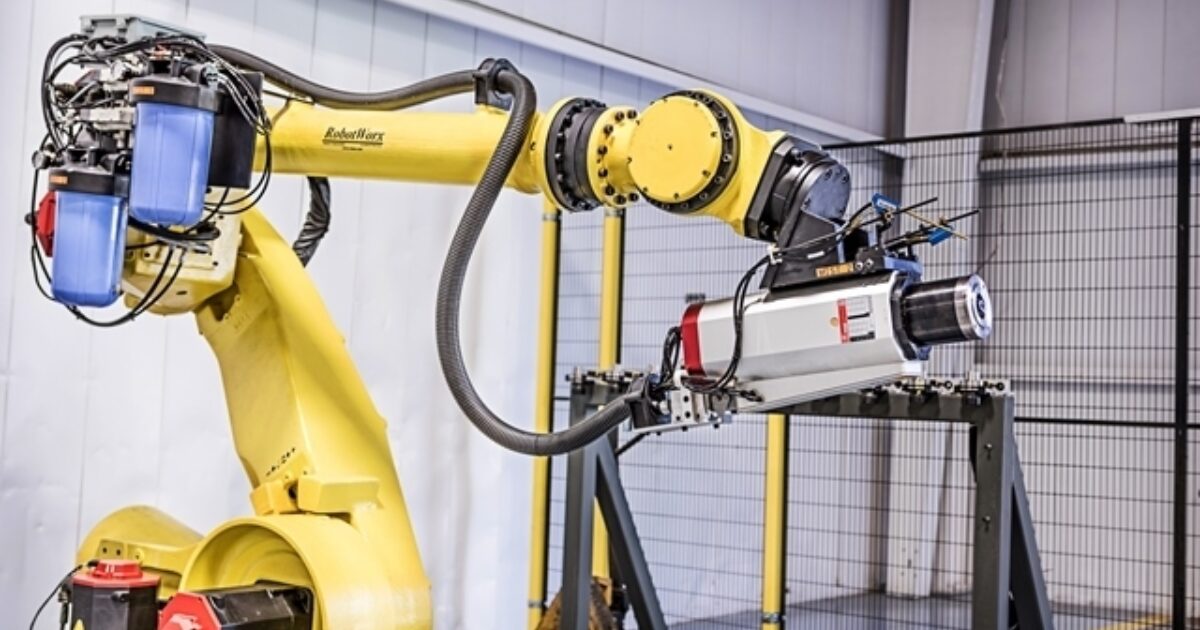
We engineer specialized end-of-arm tooling (EOAT) using lightweight materials and integrated sensors for projects in Ciénega de Flores. Our designs for Nuevo León facilities prioritize high-speed actuation and reliable part grip, ensuring that robotic motion is perfectly matched to the specific handling requirements of Mexico processes.
Deterministic Sync Logic
LVH Systems develops master sync logic that allows robot motion to be slaved to external encoders or conveyors in Ciénega de Flores. This ensures that Industrial Robotics Integration operations in Nuevo León remain perfectly synchronized with varying line speeds, preventing product damage and ensuring consistent quality throughout Mexico.
High-Fidelity Path Simulation
We utilize advanced simulation software to validate robotic pathing and collision avoidance for Ciénega de Flores facilities. This technical step in Nuevo León allows for the optimization of multi-robot coordinated motion before hardware deployment, ensuring that Mexico production starts with the highest possible throughput.
Force-Torque Integration
Our group integrates high-resolution force-torque sensors for precision robotic assembly in Ciénega de Flores. By providing the controller with tactile feedback in Nuevo León, we enable robots to perform delicate tasks like part insertion or surface finishing with a high degree of sensitivity and repeatability.
Our Process
Baseline Servo Audit
Measuring current torque profiles and mechanical vibration in Ciénega de Flores establishes the performance baseline for existing robotic motion routines before optimization work begins in Nuevo León.
Kinematic Calibration
Recalibrating the tool-center-point and coordinate frames for the Ciénega de Flores robot ensures that motion commands are translated into physical movement with the highest degree of sub-millimeter accuracy.
S-Curve Optimization
Applying jerk-limited S-curve motion profiles to the robot logic reduces mechanical stress on gearboxes, allowing for faster cycle times in Nuevo León without increasing wear on Industrial Robotics Integration assets.
Loop Response Tuning
Adjusting the PID gains on the robotic servo drives in Ciénega de Flores improves the system's response to load changes, ensuring stable and repeatable motion for high-precision Mexico assembly.
Deterministic Comms Audit
Analyzing EtherCAT or PROFINET timing ensures that motion data packets in Nuevo León are arriving within the fixed time window required for perfect multi-axis synchronization in Ciénega de Flores.
Efficiency Benchmarking
Analyzing post-optimization process metrics confirms the cycle-time reductions and energy-efficiency gains for your Mexico industrial operation, validating the ROI of the motion tuning project.
Use Cases
Handling fragile crystalline silicon wafers in PV solar assembly requires robots with ultra-low vibration motion profiles. We integrate high-speed SCARA robots using S-curve acceleration and non-contact Bernoulli grippers. The control strategy utilizes high-speed I/O to trigger the vacuum state at microsecond intervals, preventing wafer breakage and contamination. The technical objective is to achieve a cycle time of under 1 second per wafer with a breakage rate of less than 0.01%, maintaining high-yield production for global solar markets.
Automated assembly of complex cosmetic compacts involves picking and placing fragile powder pucks and mirrors. We integrate high-speed SCARA robots with vision inspection and precision electric grippers. The logic manages the force application for part snapping and verifies the presence of every component using integrated color sensors. The technical objective is to achieve an assembly rate of 60 units per minute with zero manual QC required, ensuring that only 100% compliant products reach the final shrink-wrap stage.
End-of-line palletizing in large distribution centers faces the challenge of managing multi-sku shipments with varying box sizes and weights. We integrate high-payload 4-axis palletizing robots with custom pattern-generation logic running on a central PLC. This architecture enables the robotic cell to dynamically adjust acceleration profiles and patterns based on real-time SKU data from the WMS. The technical objective is to maintain a continuous throughput of 1,200 cases per hour while ensuring pallet stability through precise pattern interlocking and vacuum-flow verification.
Technical Capabilities
- Safety-rated monitored stop (SRMS) allows a robot to maintain power while remaining stationary, facilitating rapid restart once a safety zone is cleared.
- Jerk is the third derivative of position and must be limited through S-curve profiles to prevent mechanical resonance and vibration during high-speed moves.
- Tool Center Point (TCP) calibration defines the 6D coordinates of the tool tip relative to the robot flange coordinate system for precise pathing.
- High-resolution absolute encoders provide the robot controller with immediate position data without requiring a homing sequence after a power cycle.
- Deterministic communication protocols like PROFINET IRT utilize time-division multiple access to guarantee motion data delivery within fixed time windows.
- Force-torque sensors provide 6-axis measurement of applied forces, allowing robot controllers to execute power and force-limited (PFL) collaborative tasks.
- Kinematic simulation reach studies identify potential mechanical interference and verify that all target process points are within the robot's work envelope.
- Collaborative robotics integration requires adherence to ISO/TS 15066, which defines the biomechanical limits for human-robot contact in collaborative operations.
- A delta robot's parallel kinematic structure minimizes moving mass, allowing for extremely high acceleration and cycle rates in pick-and-place applications.
- End-of-arm tooling (EOAT) inertia must be factored into the robot's dynamic load calculations to prevent premature gearbox wear or drive trips.
Deterministic network architecture supporting Industrial Robotics Integration.
A network rack containing managed industrial switches and EtherCAT I/O modules. This architecture serves as the deterministic backbone for robotic motion control, ensuring that all field signals and controller packets arrive with microsecond timing accuracy.
Specialized EOAT design for Industrial Robotics Integration applications.
A close-up view of a custom-engineered end-effector incorporating pneumatic actuators, vacuum grippers, and proximity sensors. The tooling is optimized for low-mass dynamics, allowing the robot to achieve high-speed part handling with absolute reliability.
Frequently Asked Questions
What is 'Jerk-Limited' motion, and why is it important for Ciénega de Flores robots?
Jerk-limited motion uses S-curve acceleration to minimize the rate of change of acceleration. For systems in Nuevo León, this reduces mechanical vibration and wear on gearboxes, allowing for faster smooth motion and longer mechanical lifespans for robotic units throughout Mexico.
How is kinematic singularity avoidance managed in robot logic in Nuevo León?
We utilize path simulation in Ciénega de Flores to identify singularity points—where joint alignments cause loss of control degrees of freedom. By programming joint-space moves or adjusting toolpaths in Nuevo León, we ensure the robot operates with continuous, predictable motion during complex tasks.
Can you synchronize robotic motion with an external conveyor in Ciénega de Flores?
Yes, we implement 'Conveyor Tracking' logic using external encoder feedback. This allows the robot in Nuevo León to dynamically adjust its tool-center-point to follow a moving part, ensuring precision handling in Mexico applications without stopping the production line.
Does LVH Systems support 7-axis robotics or linear rail integration in Mexico?
Yes, we integrate additional degrees of freedom, such as robots mounted on linear tracks or rotary positioners. For projects in Ciénega de Flores, we develop the coordinated motion logic that treats the rail as an integrated 7th axis, expanding the robot's work envelope across your Nuevo León facility.
What is the importance of 'Tool Center Point' (TCP) calibration in Ciénega de Flores?
TCP calibration ensures the robot knows the exact location of its working tool in 3D space. Accurate calibration in Nuevo León is essential for sub-millimeter precision in assembly or dispensing, ensuring consistent quality for all Industrial Robotics Integration processes in Mexico.
How are robot payload limits calculated for facilities in Nuevo León?
We calculate payload based on tool weight, part weight, and the center of gravity offset from the robot flange. For Ciénega de Flores installations, we also factor in dynamic inertia during high-speed moves to ensure the robot operates within its mechanical stress limits throughout Mexico.
Do you integrate force-torque sensors for tactile robotic assembly in Ciénega de Flores?
Yes, we use force-torque sensors to provide the robot with 'haptic' feedback. This allows the controller in Nuevo León to adjust its force in real-time for tasks like part insertion or deburring, achieving human-like sensitivity in automated Mexico assembly environments.
What is the typical update rate for a high-performance robotic servo loop in Ciénega de Flores?
Modern controllers operate at update rates of 1ms to 4ms for internal servo loops. For high-speed applications in Nuevo León, we utilize deterministic networking to ensure that external sensor data is processed at the same frequency, maintaining the stability of the entire motion system.
Related Resources
Navigation
Technical Foundations
Quantify Your Robotic Scope in Ciénega de Flores
Generic automation quotes lead to underscoped integration risks. Utilize our technical diagnostic to define your I/O magnitude, kinematic requirements, and safety performance levels before vendor introduction.
Begin Robotic Scope Diagnostic