Industrial Robot Integration in Senguio, Michoacán | LVH Systems
Industrial robotics integration in Senguio, Michoacán requires an engineering-first approach to logic synchronization and safety zoning. LVH Systems provides comprehensive technical audits and integration strategies for robotic cells throughout Mexico, specializing in high-payload dynamics and precision motion control. We utilize EtherCAT for real-time deterministic networking and integrate high-fidelity vision inspection for automated quality verification. Our group focuses on mitigating technical debt through modular programming and detailed documentation, ensuring that robotic assets in Michoacán remain maintainable. We deliver full lifecycle support, from initial kinematics simulation to on-site commissioning and performance tuning.
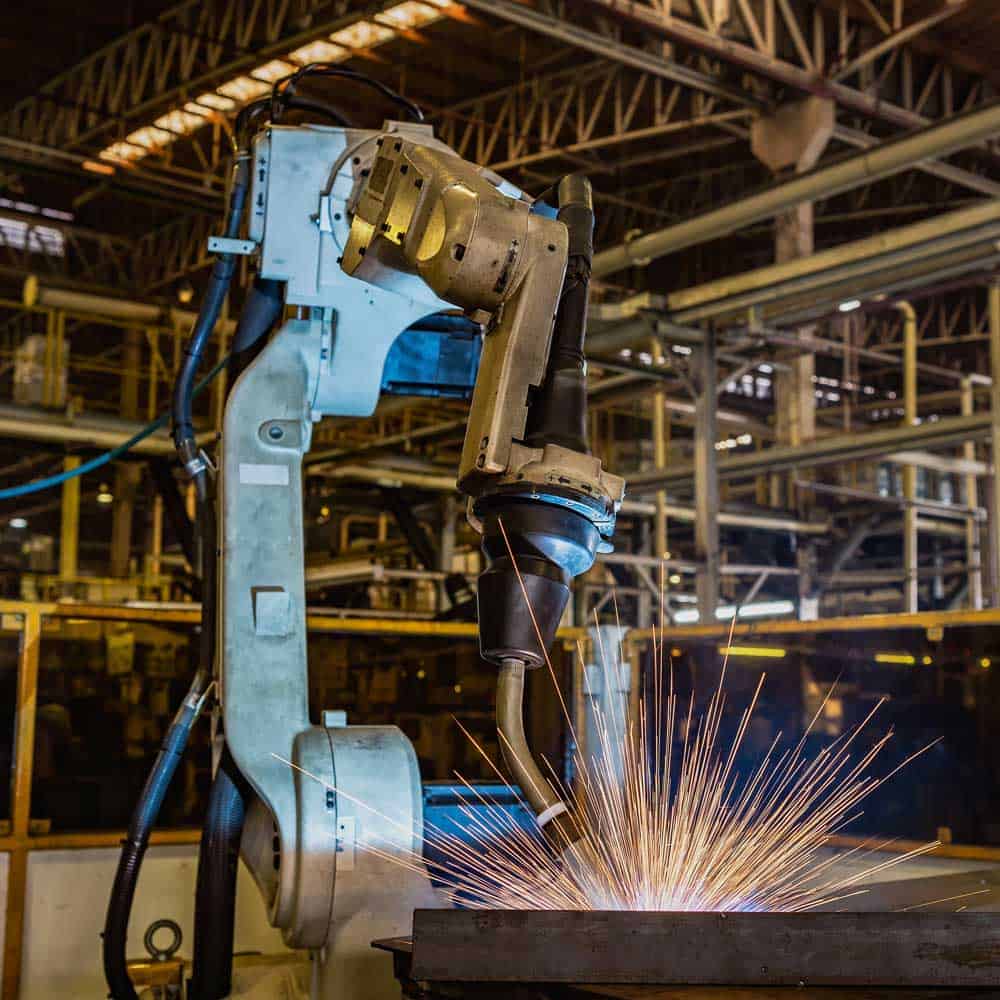
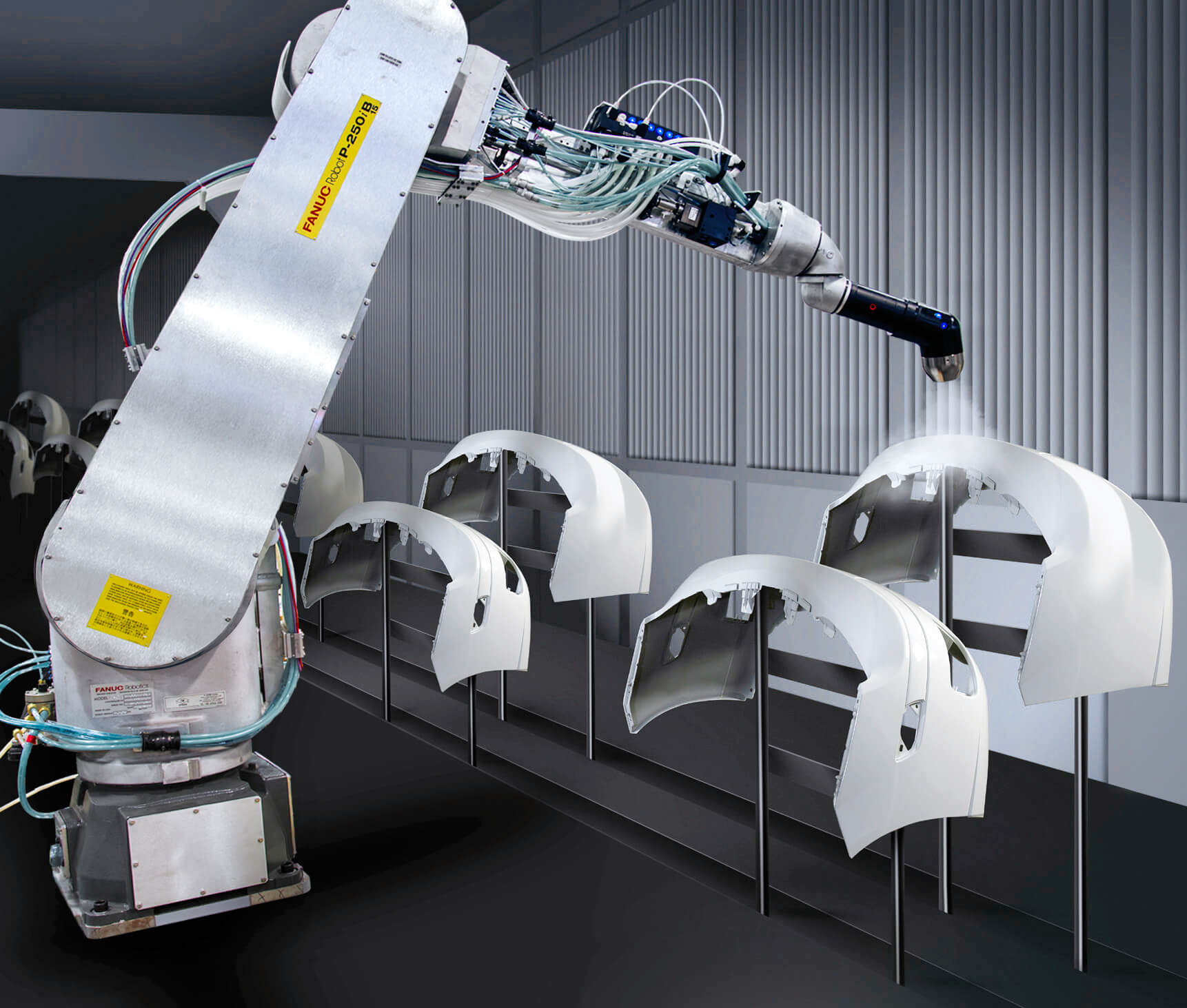
Robotic welding integration in Senguio, Michoacán is defined by the need for absolute repeatability and the management of complex process variables. LVH Systems provides specialized integration for MIG, TIG, and laser welding cells across Mexico, focusing on the technical coordination between robot motion and power source feedback. The integration of a welding robot requires a deep understanding of multi-axis synchronization to maintain constant torch angle and travel speed along complex 3D toolpaths. Our engineering group architects these systems using high-speed industrial Ethernet protocols to allow the robot controller to dynamically adjust weld parameters based on real-time feedback from seam-tracking sensors. We prioritize 'Deterministic Pathing,' ensuring that kinematic singularities are avoided and that cable management for the welding package is optimized for maximum reach and durability in Michoacán. Safety is paramount in welding environments; we implement hardened safety enclosures and integrated fume extraction logic, validating all safety-rated monitored stops (SRMS) according to ISO 13849. For industrial sites in Senguio, we deliver a fully documented logic package and redlined schematics, ensuring that the facility maintains total ownership of the welding process and can perform logic optimizations as production requirements evolve.
Providing technical integration services to industrial facilities within the Senguio metropolitan area and throughout Michoacán.
Technical content for Industrial Robotics Integration in Senguio, Michoacán last validated on April 5, 2026.
Services
Legacy Controller Migration
We manage the replacement of obsolete robot controllers with modern, supported platforms for industrial sites in Senguio. LVH Systems develops hardware bridges to allow modern Industrial Robotics Integration controllers in Michoacán to communicate with legacy mechanical units, restoring spare-parts availability across Mexico.
Logic & Program Conversion
Our engineers perform forensic code extraction and conversion from aging robotic systems in Senguio. We translate legacy motion routines into modern programming structures for Michoacán facilities, improving diagnostic transparency and allowing for the integration of new Industrial Robotics Integration features like IIoT telemetry.
Robotic Servo Modernization
We specify and commission modern servo drives for existing robotic mechanical frames in Michoacán. By upgrading the drive layer in Senguio, we improve the motion precision and energy efficiency of aging Industrial Robotics Integration assets, extending their operational life within your Mexico facility.
Fieldbus Protocol Bridging
LVH Systems implements protocol converters to link legacy robotic networks like DeviceNet or Profibus to modern EtherNet/IP backbones in Senguio. This allows for plant-wide data transparency in Michoacán, enabling legacy robots to share production metrics with modern enterprise systems across Mexico.
Robot Performance Benchmarking
We perform technical audits of existing robotic installations in Senguio to identify mechanical wear and logic bottlenecks. Our group delivers a prioritized roadmap for Michoacán facility modernization, ensuring that Industrial Robotics Integration investments in Mexico are focused on maximum ROI and reliability.
Safety Retrofitting & Validation
We upgrade the safety systems of legacy robotic cells in Senguio to meet current ISO 10218 standards. By adding modern safety PLCs and light curtains in Michoacán, we bring aging Industrial Robotics Integration assets into compliance, protecting your Mexico personnel while enabling collaborative operational modes.
Our Process
Obsolescence Audit
Evaluating the manufacturer support status of aging robot controllers in Senguio identifies the critical hardware risks that threaten production continuity for your facility in Michoacán.
Forensic Program Extraction
Capturing legacy motion routines and coordinate data from obsolete Industrial Robotics Integration systems in Senguio provides the logic foundation needed for a safe and accurate modern migration.
Controller Bridge Setup
Installing temporary communication gateways allows modern Industrial Robotics Integration logic to interface with legacy field devices in Michoacán, facilitating a phased modernization of the Mexico production line.
Logic Lifecycle Translation
Translating legacy robot code into modern, modular programming structures ensures that Industrial Robotics Integration assets in Senguio are easier to diagnose and maintain for the next generation of technicians.
Parallel Validation
Running the new control logic in shadow-mode alongside the legacy system in Michoacán allows for a direct comparison of kinematic behavior before any physical cutover occurs in Senguio.
Controlled Site Cutover
Migrating the robotic cell in stages minimizes unplanned downtime in Senguio, ensuring that production in Michoacán continues while individual units are transitioned to the new control architecture.
Use Cases
Applying sealant beads to large appliance panels requires high-precision pathing and constant velocity control. We integrate 6-axis robots with automated dispensing pumps, slaving the pump's flow rate to the robot's tool-center-point speed in real-time. This deterministic control strategy ensures a uniform bead width even around complex corners and radii. The objective is to reduce sealant waste by 15% and eliminate manual rework by ensuring 100% consistent application across every unit in the high-volume production line.
High-speed stacking of lithium-ion battery electrodes requires micron-level alignment and rapid cycle rates. We integrate high-performance linear robots with high-speed vision feedback and vacuum grippers. The control logic performs real-time offset corrections for every layer, maintaining a stacking tolerance of +/- 20 microns. This high-fidelity orchestration is critical for achieving the high energy density and safety required for modern EV battery cells, maximizing production throughput in a high-volume manufacturing environment.
Secondary packaging of vial trays in sterile environments requires non-disruptive robotic integration that minimizes particulate generation. We deploy collaborative robots with cleanroom-certified coatings, utilizing power and force limiting (PFL) to operate alongside human inspectors without physical guarding. The control strategy integrates high-resolution vision for label verification and 1D/2D barcode tracking. The objective is to achieve 100% traceability and error-free tray loading while adhering to ISO 5 cleanroom standards and protecting delicate glass primary packaging from mechanical stress.
Technical Capabilities
- Light curtains and laser scanners provide non-contact safety detection, triggering safe-stop routines when an object breaks the protective optical field.
- Robotic path optimization software analyzes kinematic trajectories to minimize cycle times while reducing energy consumption and mechanical stress.
- HMI interfaces for robotics should follow ISA-101 standards to improve operator situational awareness and reduce response times to system errors.
- Singularity avoidance algorithms dynamically adjust a robot's tool orientation to prevent joints from aligning in a way that causes erratic motion.
- Managed industrial switches are required in robotic networks to manage IGMP snooping and prevent multicast traffic from congesting deterministic motion links.
- Absorbed energy during robotic collisions can be mitigated through high-speed torque monitoring and collision-detection algorithms in the robot controller.
- Robotic cable management systems must be engineered for high-flex cycles to prevent failure of power and communication lines during continuous operation.
- SCADA integration for robotics allows for the aggregation of OEE data and the remote monitoring of servo health through MQTT or OPC UA.
- Structured Text (ST) is often used in robotic master logic for complex mathematical calculations that are difficult to represent in Ladder Logic.
- Safety-rated encoders provide redundant position feedback to the safety controller, ensuring that a robot's safe-speed limits are accurately enforced.
Expert programming and diagnostics for Industrial Robotics Integration assets.
A technician utilizes a handheld teach pendant to perform kinematic calibration and logic testing on an industrial robot. The interface provides access to real-time joint data and error logs, facilitating precise tool-center-point definition and path optimization.
Precision welding orchestration for Industrial Robotics Integration systems.
A high-performance robotic welding cell featuring a six-axis arm and an integrated power source. The cell is equipped with safety-rated door interlocks and specialized fume extraction, highlighting the synchronization between the robot controller and auxiliary equipment in a regulated industrial environment.
Frequently Asked Questions
How is functional safety for robotics validated in Senguio?
We perform on-site safety validation using calibrated testing equipment to verify every emergency stop, light curtain, and safety-rated logic block. Our engineers in Michoacán provide a final validation report documenting compliance with ISO 13849, ensuring personnel protection for all Mexico deployments.
What is the difference between an industrial robot and a collaborative robot for Michoacán facilities?
Industrial robots in Senguio require physical guarding due to high speeds and forces. Collaborative robots (cobots) are designed with power and force limiting (PFL) to work alongside humans. We integrate both based on the specific risk profile and throughput requirements of your Mexico application.
Does your integration work adhere to ISO 10218 standards?
Every robotic cell we architect for Senguio follows the safety requirements defined in ISO 10218-1 and ISO 10218-2. This technical rigor ensures that robotic integration in Michoacán considers the entire lifecycle, from design and installation to long-term maintenance and decommissioning.
How do you secure robotic networks against external OT cyber threats in Mexico?
We implement the 'Defense in Depth' model, utilizing VLAN segmentation and secure gateways to isolate robot controllers in Senguio. By adhering to IEC 62443 principles in Michoacán, we protect your robotic assets from unauthorized access while maintaining the low-latency comms needed for motion.
What safety-rated software modules do you configure for high-speed robots?
We configure safety modules like FANUC DCS or KUKA SafeOperation in Senguio to define restricted Cartesian zones and safe-speed limits. This technical configuration in Michoacán allows for smaller cell footprints while providing validated protection for surrounding facility equipment and plant personnel.
Can you integrate SIL-rated safety PLCs with robot controllers?
Yes, we specialize in linking safety-rated PLCs with robot controllers via secure protocols like CIP Safety. This allows for centralized safety management of the entire Senguio production line, ensuring that an emergency stop in one zone triggers the correct deterministic response in Michoacán.
Are safety risk assessments mandatory for all Industrial Robotics Integration projects in Senguio?
A formal risk assessment is an essential technical requirement for any robotic cell. We perform these audits in Michoacán to identify potential hazards and determine the required Performance Level (PL) for every safety function, satisfying regulatory and insurance obligations for your Mexico facility.
How do you handle safety zoning for multi-robot workspaces in Senguio?
We implement dynamic safety zoning, utilizing area scanners and safety-rated encoders to track robot positions in real-time. This orchestration in Michoacán allows multiple robots to work in close proximity, automatically adjusting speeds or stopping motion only when a specific collision risk is detected.
Related Resources
Navigation
Technical Foundations
Quantify Your Robotic Scope in Senguio
Generic automation quotes lead to underscoped integration risks. Utilize our technical diagnostic to define your I/O magnitude, kinematic requirements, and safety performance levels before vendor introduction.
Begin Robotic Scope Diagnostic