Industrial Robotics Integration & Engineering Services | Castrovillari, Calabria
LVH Systems specializes in the orchestration of multi-robot environments in Castrovillari, Calabria, providing technically rigorous integration for manufacturing and packaging infrastructure. Our Industrial Robotics Integration scope across Italy includes the design of modular robotic cells, the programming of complex motion profiles, and the integration of 2D/3D vision guidance for randomized part handling. We implement low-latency communication between robot controllers and master PLCs, optimizing jerk-limited motion trajectories to extend mechanical longevity. For industrial operators in Calabria, our commissioning process ensures that every servo loop and kinematic chain is validated for accuracy and repeatability before final handoff.
Industrial palletizing robotics represent a critical intersection of heavy payload handling and complex pattern logic for facilities in Castrovillari, Calabria. LVH Systems delivers engineered palletizing solutions throughout Italy, focusing on the integration of high-reach, high-capacity 4-axis and 6-axis robots. The engineering scope for these systems involves the management of variable inertia during the pallet-build sequence, requiring sophisticated acceleration and deceleration profiles to prevent product slippage. Our technical group in Calabria develops the master control logic that coordinates the robot with auxiliary conveyor systems, stretch wrappers, and automatic pallet dispensers. We utilize real-time data from laser area scanners and safety-rated encoders to manage safety zoning, ensuring that operators can interact with the cell safely during material replenishment. For projects in Castrovillari, we emphasize 'Orchestration Logic,' where the robot controller functions as a secondary node to a centralized PLC, allowing for unified alarm management and production reporting. Our commissioning process includes exhaustive testing of multi-size recipe logic and vacuum-flow verification, ensuring that every palletizing cell is optimized for stability and maximum unit-per-hour output. LVH Systems provides the technical rigor necessary to transform end-of-line bottlenecks into high-efficiency automated assets.
Providing technical integration services to industrial facilities within the Castrovillari metropolitan area and throughout Calabria.
Technical content for Industrial Robotics Integration in Castrovillari, Calabria last validated on April 5, 2026.
Services
Vision-Guided Kinematics
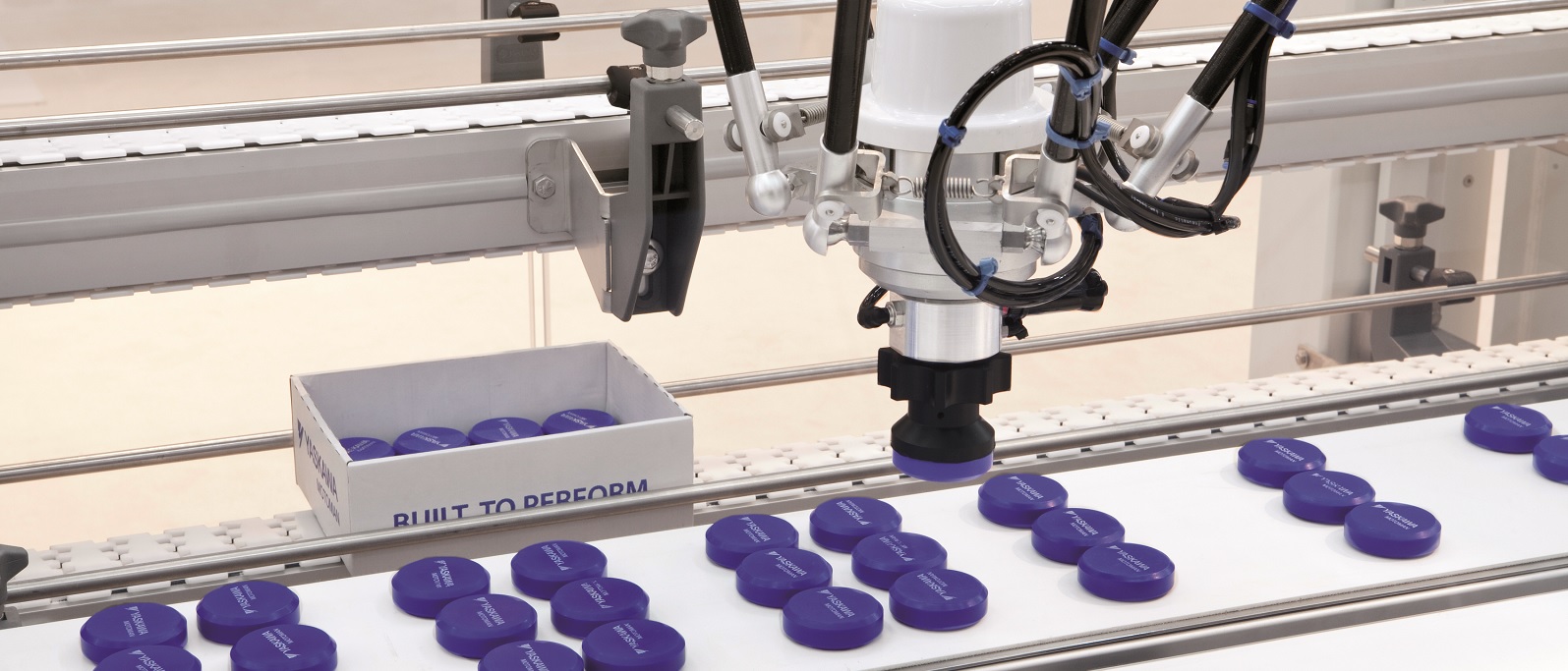
We integrate 2D and 3D vision systems to guide robotic kinematics in Castrovillari. LVH Systems develops high-speed calibration routines that allow robot controllers in Calabria to identify and handle randomized parts on moving conveyors with sub-millimeter precision for high-volume Italy assembly lines.
Multi-Axis Servo Tuning
Our engineers perform precision servo tuning to optimize acceleration and deceleration curves for robots in Calabria. By reducing mechanical vibration and overshoot in Castrovillari, we improve the cycle times of Industrial Robotics Integration systems and significantly extend the life of high-precision gearboxes and motors.
End-of-Arm Tooling Design
We engineer specialized end-of-arm tooling (EOAT) using lightweight materials and integrated sensors for projects in Castrovillari. Our designs for Calabria facilities prioritize high-speed actuation and reliable part grip, ensuring that robotic motion is perfectly matched to the specific handling requirements of Italy processes.
Deterministic Sync Logic
LVH Systems develops master sync logic that allows robot motion to be slaved to external encoders or conveyors in Castrovillari. This ensures that Industrial Robotics Integration operations in Calabria remain perfectly synchronized with varying line speeds, preventing product damage and ensuring consistent quality throughout Italy.
High-Fidelity Path Simulation
We utilize advanced simulation software to validate robotic pathing and collision avoidance for Castrovillari facilities. This technical step in Calabria allows for the optimization of multi-robot coordinated motion before hardware deployment, ensuring that Italy production starts with the highest possible throughput.
Force-Torque Integration
Our group integrates high-resolution force-torque sensors for precision robotic assembly in Castrovillari. By providing the controller with tactile feedback in Calabria, we enable robots to perform delicate tasks like part insertion or surface finishing with a high degree of sensitivity and repeatability.
Our Process
Baseline Servo Audit
Measuring current torque profiles and mechanical vibration in Castrovillari establishes the performance baseline for existing robotic motion routines before optimization work begins in Calabria.
Kinematic Calibration
Recalibrating the tool-center-point and coordinate frames for the Castrovillari robot ensures that motion commands are translated into physical movement with the highest degree of sub-millimeter accuracy.
S-Curve Optimization
Applying jerk-limited S-curve motion profiles to the robot logic reduces mechanical stress on gearboxes, allowing for faster cycle times in Calabria without increasing wear on Industrial Robotics Integration assets.
Loop Response Tuning
Adjusting the PID gains on the robotic servo drives in Castrovillari improves the system's response to load changes, ensuring stable and repeatable motion for high-precision Italy assembly.
Deterministic Comms Audit
Analyzing EtherCAT or PROFINET timing ensures that motion data packets in Calabria are arriving within the fixed time window required for perfect multi-axis synchronization in Castrovillari.
Efficiency Benchmarking
Analyzing post-optimization process metrics confirms the cycle-time reductions and energy-efficiency gains for your Italy industrial operation, validating the ROI of the motion tuning project.
Use Cases
Robotic deburring of large engine castings in heavy manufacturing involves managing high-vibration tool loads and varying surface finishes. We implement a force-torque sensing strategy on a high-payload robot arm, allowing the controller to maintain a constant tool pressure against the casting surface regardless of path deviation. This deterministic control loop adjusts the kinematic speed to maintain consistent material removal rates. The technical objective is to automate a hazardous manual task, ensuring uniform part quality and reducing the cycle time of the finishing process by 40%.
Assembling complex instrument clusters in Tier 1 automotive facilities involves multi-part picking and screw-driving. We integrate collaborative robots with automated screw-feeders and torque-sensing drivers. The control strategy uses a safety PLC to manage safe-limited speed zones, allowing humans to replenish part bins without stopping the robot. This orchestration increases the cycle time efficiency of the assembly station by 30% while ensuring every screw is driven to the exact torque specification for automotive quality validation.
High-speed de-palletizing of glass bottles requires robots to handle fragile product with varying layer heights. We integrate 4-axis palletizing robots with high-resolution laser distance sensors and vacuum-head end-effectors. The control logic dynamically adjusts the pick height for every bottle layer, compensating for pallet variations. The technical objective is to achieve a throughput of 60,000 bottles per hour while reducing glass breakage rates by 50% compared to traditional mechanical de-palletizers.
Technical Capabilities
- Robot controllers utilize look-ahead algorithms to calculate the optimal velocity profile for the upcoming segments of a motion path.
- SIL 3 safety integrity level requires a probability of dangerous failure per hour between 10^-8 and 10^-7 for safety-related control functions.
- Robot reachability studies identify areas of the workspace where joint limits or singularities prevent the robot from reaching target orientations.
- Force-mode control allows a robot to maintain a constant pressure against a surface, which is critical for grinding, polishing, and deburring.
- Industrial PCs running real-time operating systems can function as soft-robot-controllers, providing high flexibility for custom kinematic applications.
- Safe Torque Off (STO) is a basic safety function that removes power from the motor without disconnecting the drive from the main supply.
- The center of mass for a robot tool impacts the rotational inertia seen by the wrist joints, affecting the robot's maximum allowable acceleration.
- OPC UA PubSub enables high-efficiency data exchange for large robotic fleets by utilizing a publisher-subscriber model over UDP or MQTT.
- Safety-rated soft-axis limits provide a software-based alternative to physical hard stops for restricting a robot's range of motion.
- PLC logic watchdogs monitor the heartbeat of robot controllers to ensure that a communication failure triggers an immediate system-wide safe state.
Safe collaborative integration for Industrial Robotics Integration applications.
A collaborative robotic workstation showing a cobot performing precision assembly alongside a human operator. The integration emphasizes power and force limiting (PFL) sensors and safe-limited speed zones, adhering to ISO/TS 15066 specifications.
Expert programming and diagnostics for Industrial Robotics Integration assets.
A technician utilizes a handheld teach pendant to perform kinematic calibration and logic testing on an industrial robot. The interface provides access to real-time joint data and error logs, facilitating precise tool-center-point definition and path optimization.
Frequently Asked Questions
What is the typical ROI period for an industrial robot integration in Castrovillari?
ROI usually ranges from 12 to 24 months, driven by increased throughput, reduced scrap, and lower labor volatility. We perform a technical audit in Calabria to quantify current manual cycle costs and contrast them with predicted robotic efficiency gains for your Italy facility.
Which industrial robot brands does LVH Systems support in Calabria?
Our group provides specialized integration for Tier-1 brands including FANUC, ABB, KUKA, and Yaskawa. We focus on multi-platform logic development, ensuring that robotic assets in Castrovillari are perfectly synchronized with your site's existing PLC standards, whether Rockwell, Siemens, or Beckhoff.
How does multi-robot orchestration impact the integration cost?
Coordinating multiple robots in a shared workspace in Castrovillari requires advanced collision-avoidance logic and deterministic networking. The cost reflects the additional engineering hours for multi-axis synchronization and simulation, ensuring that high-density Industrial Robotics Integration cells in Calabria operate without unplanned mechanical interference.
Does LVH Systems provide 2D or 3D vision guidance for robotics in Castrovillari?
Yes, we integrate high-speed vision systems for randomized pick-and-place and automated inspection. Our engineers in Calabria configure the camera-to-robot coordinate mapping, allowing for high-fidelity part identification and dynamic kinematic adjustment for sophisticated Italy manufacturing processes.
Can we reuse existing mechanical safety fencing for a new robotic cell?
Reusability depends on the current fence's compliance with ISO 10218 standards. During our Castrovillari technical audit, we evaluate physical heights and reach-over risks in Calabria. We often augment existing fencing with modern safety PLCs and light curtains to achieve the required Performance Level.
What level of documentation is provided with a robotic project in Italy?
We deliver a comprehensive technical package including uncompiled robot source code, electrical schematics, and redline reach studies. This ensures that your facility in Castrovillari has the internal resources needed for long-term ownership and diagnostic self-sufficiency without vendor lock-in.
Do you offer simulation-only services before hardware purchase?
Yes, we perform reach and cycle-time studies to validate a robot's suitability for a specific task in Calabria. This technical verification in Castrovillari prevents expensive hardware mismatches, ensuring the selected Industrial Robotics Integration platform can physically achieve the required kinematic moves and production targets.
How is end-of-arm tooling (EOAT) specified for Industrial Robotics Integration projects?
EOAT is custom-engineered based on your product weight, surface material, and cycle-time needs. For projects in Castrovillari, we utilize 3D simulation to verify that the gripper mass does not exceed the robot's payload inertia limits, ensuring stable and reliable handling in Calabria.
Related Resources
Navigation
Technical Foundations
Quantify Your Robotic Scope in Castrovillari
Generic automation quotes lead to underscoped integration risks. Utilize our technical diagnostic to define your I/O magnitude, kinematic requirements, and safety performance levels before vendor introduction.
Begin Robotic Scope Diagnostic