Robotic Cell Integration & Scope in Lalitpur, Uttar Pradesh
For industrial facilities in Lalitpur, Uttar Pradesh, LVH Systems delivers professional Industrial Robotics Integration services focused on high-speed motion precision and safety compliance. We specialize in the deployment of collaborative and 6-axis industrial robots, utilizing advanced robot controllers and servo-driven end-of-arm tooling. Our engineers in India provide seamless integration between robotic cells and plant-wide SCADA systems, utilizing real-time industrial Ethernet protocols. We prioritize functional safety through SIL-rated safety PLCs and light curtain integration, ensuring all robotic deployments in Uttar Pradesh adhere to ISO 13849 standards while maximizing production throughput and reducing manual cycle times.
High-speed packaging environments in Lalitpur, Uttar Pradesh rely on the precise orchestration of robotics to maintain throughput and minimize product damage. LVH Systems specializes in the technical integration of packaging robotics across India, focusing on high-cycle pick-and-place applications using Delta and SCARA architectures. The core challenge in packaging is the synchronization of robotic motion with varying conveyor speeds and randomized product orientation. Our engineering group solves this through advanced 2D and 3D vision guidance, allowing robot controllers to dynamically adjust kinematic pathways in real-time based on high-fidelity sensor feedback. We implement deterministic networking via EtherCAT to manage the high-speed I/O required for vacuum grippers and specialized end-of-arm tooling (EOAT). For industrial facilities in Uttar Pradesh, we prioritize 'Logic Transparency,' ensuring that operators can manage recipe changes and monitor servo performance through intuitive, ISA-101 compliant HMI interfaces. We mitigate the risks of high-speed motion by architecting redundant safety zones and validating functional safety logic to protect personnel without compromising facility uptime. Our integration approach ensures that packaging robots in Lalitpur function as intelligent, data-driven nodes within the broader logistics framework, providing the reliability required for 24/7 operations.
Providing technical integration services to industrial facilities within the Lalitpur metropolitan area and throughout Uttar Pradesh.
Technical content for Industrial Robotics Integration in Lalitpur, Uttar Pradesh last validated on April 5, 2026.
Services
Collaborative Safety Assessment
We conduct rigorous risk assessments for collaborative robot (cobot) workstations in Lalitpur. LVH Systems defines safe speed and force limits according to ISO/TS 15066, ensuring that collaborative Industrial Robotics Integration applications in Uttar Pradesh prioritize human safety while delivering the intended productivity gains for India operators.
Safety PLC Logic Development
Our technical group develops safety-rated logic for robotic cells in Uttar Pradesh, managing emergency stops, door interlocks, and safe-speed zones. For facilities in Lalitpur, we provide documented verification of safety performance levels (PLd/PLe), ensuring that the control system remains fundamentally deterministic and fault-tolerant.
Safe-Move & Speed Monitoring
We configure safety-rated software modules, such as FANUC Dual Check Safety (DCS) or KUKA SafeOperation, for systems in Lalitpur. This ensures that robot motion in Uttar Pradesh is restricted to validated Cartesian zones and speeds, reducing the footprint of safety guarding while protecting equipment and personnel.
Redundant Safety Networking
LVH Systems implements safety-over-bus protocols like CIP Safety and Fail Safe over EtherCAT (FSoE) for robotic lines in Uttar Pradesh. This architecture ensures that safety-critical signals in Lalitpur are transmitted with high integrity, allowing for centralized safety management across multi-robot India installations.
Safety Validation Reporting
We provide comprehensive functional safety validation reports for every robotic integration in Lalitpur. Our engineers document every safety test and calculation in Uttar Pradesh, providing facility owners in India with the auditable proof of compliance required for regulatory and insurance standards.
Operator Safety Training
Technical training for Lalitpur personnel focuses on the safe operation and recovery of robotic cells. We educate your Uttar Pradesh team on safety-rated bypasses, recovery procedures, and regular proof-testing requirements, ensuring that Industrial Robotics Integration maintenance in India is performed according to strict safety protocols.
Our Process
ISO Risk Assessment
Identification of hazardous zones and interaction points within the Lalitpur cell defines the required Performance Levels for all safety-related parts of the Industrial Robotics Integration control system in Uttar Pradesh.
Safety Logic Architecture
Development of dual-channel safety-rated logic within a dedicated safety PLC ensures that every emergency stop and gate switch is managed deterministically for your India facility.
Safety Network Configuration
Configuring CIP Safety or FSoE protocols for the robotic cell in Lalitpur provides high-integrity communication between the robot controller and safety I/O modules throughout the Uttar Pradesh facility.
Forced Fault Testing
Simulating internal and external hardware failures at the lab validates that the safety logic responds correctly, preventing dangerous states in Industrial Robotics Integration systems before they reach Lalitpur.
Field Safety Validation
On-site testing of light curtains, area scanners, and safety-rated monitored stops in Uttar Pradesh confirms that the integrated safety system provides the required protection for personnel in Lalitpur.
Validation Documentation
Preparation of the final validation report and SISTEMA calculations provides your India facility with auditable proof that the robotic cell meets all international safety compliance standards.
Use Cases
Assembling high-precision medical instruments requires delicate handling and validated process control. We deploy collaborative robots integrated with high-precision electric grippers and force-feedback sensors. The logic manages the insertion of sub-millimeter components, using force-monitoring to detect and reject misaligned parts instantly. This strategy ensures 100% assembly validation and provides an auditable record of the insertion force for every device, satisfying FDA quality standards while increasing the throughput of the sterile assembly cell.
Automated injection mold tending involves high-speed part extraction and gate-cutting. We integrate 6-axis robots with a master mold-opening signal, utilizing high-speed synchronization to enter and exit the mold within a 2-second window. The robot logic manages secondary operations like flame-treating or label application during the mold's next cooling cycle. This orchestration maximizes the utilization of the injection molding machine and ensures consistent part quality by eliminating the thermal variation caused by manual extraction.
Automated assembly of complex cosmetic compacts involves picking and placing fragile powder pucks and mirrors. We integrate high-speed SCARA robots with vision inspection and precision electric grippers. The logic manages the force application for part snapping and verifies the presence of every component using integrated color sensors. The technical objective is to achieve an assembly rate of 60 units per minute with zero manual QC required, ensuring that only 100% compliant products reach the final shrink-wrap stage.
Technical Capabilities
- Functional safety calculation tools like SISTEMA combine MTTFd and diagnostic coverage to determine the achieved Performance Level of a cell.
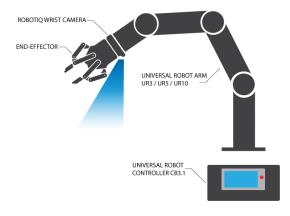
- Tool-flange coordinate systems serve as the reference point for mounting all end-of-arm tooling and defining the tool-center-point.
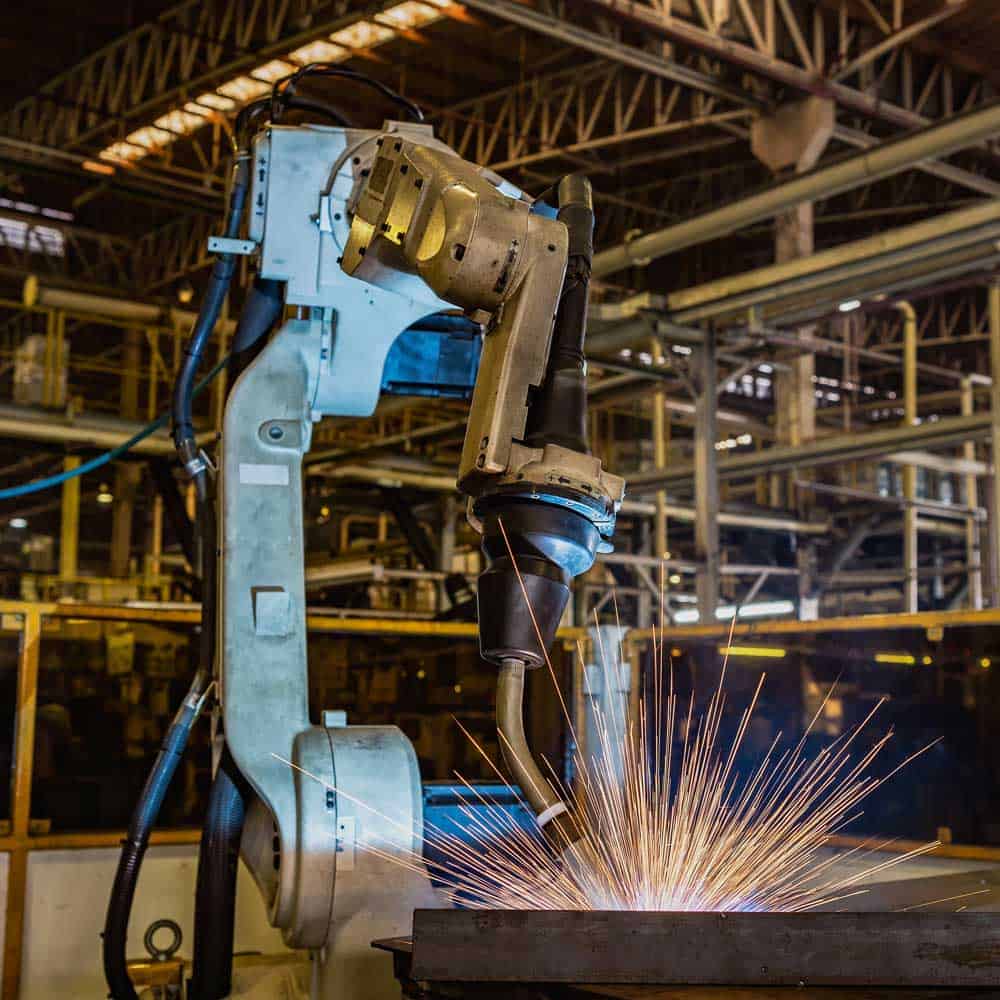
- Robotic weld controllers communicate with power sources using high-speed digital links to adjust voltage and wire-speed during the weld cycle.
- Safe-speed monitoring during teach-mode is a mandatory safety requirement, restricting the robot to 250mm/s for operator protection.
- Deterministic communication for robotics requires managed switches to prioritize PTP or EtherCAT traffic over non-critical monitoring data.
- Force-torque sensing in the robot base can identify collisions anywhere on the robot arm, providing an additional layer of mechanical protection.
- The Mean Time to Dangerous Failure (MTTFd) is a statistical measure of the reliability of safety-related components in a robotic control system.
- Robot payload capacity is strictly limited by the moment of inertia and the center of gravity offset from the tool-flange mounting face.
- EtherCAT motion synchronization utilizes distributed clocks to maintain jitter levels below one microsecond for high-speed multi-axis coordination.
- ISO 10218-2 specifies that robotic cell integration must include a documented risk assessment that defines Performance Level requirements for every safety function.
Scalable multi-robot orchestration for Industrial Robotics Integration production.
A panoramic view of a modern manufacturing facility showing a series of integrated robotic cells. Each cell functions as an intelligent node within a facility-wide deterministic network, synchronized for high-volume automated production.
Safe collaborative integration for Industrial Robotics Integration applications.
A collaborative robotic workstation showing a cobot performing precision assembly alongside a human operator. The integration emphasizes power and force limiting (PFL) sensors and safe-limited speed zones, adhering to ISO/TS 15066 specifications.
Frequently Asked Questions
Can you modernize a legacy robotic cell without replacing the mechanical arm in Lalitpur?
Yes, we often perform 'Brain Transplants' where we replace obsolete controllers and drives while retaining the mechanical arm. This approach in Uttar Pradesh restores spare-parts availability and technical support for your Industrial Robotics Integration assets in Lalitpur without the capital cost of new arm procurement.
How do you minimize downtime during a robotic system migration in Uttar Pradesh?
We mitigate downtime through phased deployments and parallel logic runs. By simulating the new control logic in Lalitpur before site arrival and using hardware-in-the-loop validation, we ensure a seamless cutover for your India facility within existing maintenance shutdown windows.
What is the process for extracting programs from obsolete legacy robots in Lalitpur?
For aging robots in India with no documentation, we perform forensic logic extraction from the controller memory. We reconstruct the coordinate frames and sequence of operations in Uttar Pradesh, providing the essential technical foundation needed for modernization or troubleshooting at your Lalitpur site.
Can you upgrade our robotic cell to collaborative operation in Uttar Pradesh?
While possible, this requires a complete risk assessment and often the addition of force-limiting sensors and safety-rated logic. For facilities in Lalitpur, we evaluate the existing arm's inertia and speed capabilities to determine if a collaborative retrofit is a technically sound path for your India process.
Do you provide technical support for discontinued robot platforms like the FANUC R-J2 in Lalitpur?
Yes, we specialize in maintainability for obsolete systems while developing a migration roadmap. For industrial sites in Uttar Pradesh, we provide logic-level troubleshooting and search our global networks for critical spare parts to keep your legacy Industrial Robotics Integration infrastructure operational.
Does a robot modernization project require re-validation of the safety system in India?
Any change to the control layer necessitates a safety validation. In Lalitpur, we perform a focused audit of the safety functions, ensuring that new safety PLCs or updated logic meet current Performance Level requirements for the Industrial Robotics Integration cell in Uttar Pradesh.
How do you manage hardware bridging between legacy and modern robotic networks in Lalitpur?
We utilize gateway devices to link legacy protocols like DeviceNet to modern EtherNet/IP or EtherCAT backbones. This allows industrial facilities in Uttar Pradesh to modernize controllers incrementally while retaining existing field wiring and safety devices for their India assets.
What happens if a new motion profile fails during on-site commissioning in Lalitpur?
Our commissioning protocols include mandatory logic backups and a predefined rollback plan. If a new kinematic move causes an anomaly at your Lalitpur site, our engineers in Uttar Pradesh can instantly restore the previous known-good state, protecting your production from unplanned outages.
Related Resources
Navigation
Technical Foundations
Quantify Your Robotic Scope in Lalitpur
Generic automation quotes lead to underscoped integration risks. Utilize our technical diagnostic to define your I/O magnitude, kinematic requirements, and safety performance levels before vendor introduction.
Begin Robotic Scope Diagnostic