Technical Industrial Robotics Integration Hub: Ulladulla, New South Wales
LVH Systems delivers high-authority Industrial Robotics Integration for the defense and regulated manufacturing sectors in Ulladulla, New South Wales. Our technical group in Australia specializes in the architecture of hardened robotic cells featuring secure OT network segmentation and deterministic control logic. We integrate advanced force-limiting collaborative robots and high-speed industrial platforms, utilizing real-time feedback from high-resolution encoders and vision systems. By enforcing strict change control and functional safety validation, we ensure that robotic integrations in New South Wales meet rigorous audit requirements. Our expertise includes the programming of complex kinematic pathways and the integration of specialized end-of-arm tooling for high-stakes assembly.
High-precision pick-and-place robotics integration in Ulladulla, New South Wales requires an engineering-led approach to minimize latency and maximize accuracy. LVH Systems specializes in the deployment of high-speed robotic systems for electronics assembly and pharmaceutical handling throughout Australia. These systems often utilize high-resolution vision systems to identify small components on moving conveyors, requiring the robot controller to execute complex coordinate transformations in milliseconds. Our technical group in New South Wales manages the integration of these robots via EtherCAT, ensuring that servo loop update rates are optimized for sub-millimeter precision. We focus on the engineering of specialized end-of-arm tooling (EOAT), incorporating lightweight materials and integrated sensors to reduce the moving mass and increase cycle times. For industrial operators in Ulladulla, we mitigate integration risk by performing hardware-in-the-loop (HIL) simulation before on-site deployment, verifying that the pick-and-place logic can handle peak throughput without collisions or dropped parts. Our deployments prioritize diagnostic transparency, allowing technicians to monitor vacuum levels and servo torque profiles through high-performance SCADA interfaces. LVH Systems ensures that every pick-and-place integration is built for high-availability performance in demanding cleanroom or manufacturing environments.
Providing technical integration services to industrial facilities within the Ulladulla metropolitan area and throughout New South Wales.
Technical content for Industrial Robotics Integration in Ulladulla, New South Wales last validated on April 5, 2026.
Services
Robotic Cell Engineering
LVH Systems provides comprehensive 3D reach studies and kinematic simulation for robotic cells in Ulladulla. We optimize floor space utilization and cycle times in New South Wales, ensuring that every mechanical move is validated for efficiency and hardware-limited safety before physical installation commences throughout Australia.
Controller Logic Programming
Our engineers develop custom motion logic for FANUC, ABB, and KUKA controllers in Ulladulla. We focus on creating modular, well-commented code that handles multi-axis coordination and error recovery, providing Industrial Robotics Integration operators in New South Wales with a transparent and maintainable control layer for complex industrial processes.
Functional Safety Integration
We implement safety-instrumented systems for robotics in New South Wales, adhering to ISO 10218 and ISO 13849 standards. By integrating SIL-rated safety PLCs, light curtains, and safety-rated monitored stops, we protect personnel in Ulladulla while maintaining the required operational uptime for high-performance Australia facilities.
Deterministic OT Networking
LVH Systems architects low-latency industrial networks using EtherCAT and PROFINET to synchronize robot controllers with plant PLCs in Ulladulla. Our network designs for New South Wales ensure sub-millisecond data exchange, allowing for real-time motion adjustment and high-fidelity telemetry across the entire robotic infrastructure.
Field Commissioning & SAT
Our group performs exhaustive on-site Site Acceptance Testing (SAT) for robotic installations in Ulladulla. We perform I/O validation, tool-center-point calibration, and payload verification in New South Wales, ensuring that the integrated system meets every functional requirement before the final handoff in Australia.
Robotic Lifecycle Support
We offer post-commissioning technical support and maintenance audits for robotic cells in Ulladulla. From logic optimizations to servo tuning and grease analysis, we ensure that Industrial Robotics Integration assets across New South Wales continue to operate with high availability and precision throughout their multi-year lifecycle.
Our Process
Technical Audit
Mapping existing infrastructure and reach requirements in Ulladulla allows for an accurate definition of the project scope and hardware constraints before any Industrial Robotics Integration design work commences in New South Wales.
Reach & Cycle Simulation
3D modeling of kinematic paths and cycle-time analysis ensures the robotic cell meets your Ulladulla facility throughput goals while avoiding mechanical singularities or collisions during operation in New South Wales.
Electrical & Logic Design
Engineering of the robot control enclosure and the development of modular PLC-to-Robot logic occurs according to IEC standards, prioritizing maintainability for technical teams across Australia.
Panel & EOAT Fabrication
Assembly of the control cabinet and specialized end-of-arm tooling in Ulladulla emphasizes professional wiring and robust mechanical integration, ensuring long-term reliability for your Industrial Robotics Integration project.
Factory Acceptance (FAT)
Comprehensive simulation and testing of the robot logic against simulated field devices validates the system performance before it leaves the lab, reducing the risk of downtime during Ulladulla commissioning.
On-Site Installation
Physical mounting and field wiring of the robotic cell at your New South Wales facility involves rigorous grounding and cable management to protect high-speed communication signals from industrial interference.
Site Commissioning (SAT)
On-site loop checks, tool calibration, and final performance tuning ensure the integrated Industrial Robotics Integration system operates correctly under real production conditions at your project site in Ulladulla.
Handoff & Documentation
Delivery of uncompiled source logic, reach studies, and redline schematics ensures your New South Wales facility maintains total technical ownership and self-sufficiency for the integrated robotic assets.
Use Cases
Assembling complex instrument clusters in Tier 1 automotive facilities involves multi-part picking and screw-driving. We integrate collaborative robots with automated screw-feeders and torque-sensing drivers. The control strategy uses a safety PLC to manage safe-limited speed zones, allowing humans to replenish part bins without stopping the robot. This orchestration increases the cycle time efficiency of the assembly station by 30% while ensuring every screw is driven to the exact torque specification for automotive quality validation.
Robotic welding of heavy earthmoving buckets involves massive multi-pass welds on thick-plate steel. We integrate high-payload robots with synchronized 2-axis positioners to keep every weld in a flat, high-deposition orientation. The control strategy utilizes high-fidelity arc-sensing to track the weld joint and adjust the robot path for thermal expansion. This orchestration achieves 100% weld penetration and reduces the total fabrication time for a single bucket assembly from 40 hours to 12 hours.
Body-in-white assembly in high-volume automotive plants requires the synchronization of over 50 six-axis robots within a single welding line. We implement multi-robot orchestration logic using GuardLogix safety PLCs and EtherNet/IP to manage coordinated welding and part transfer. This strategy ensures SIL 3 safety compliance and utilizes collision-avoidance algorithms to prevent mechanical interference in shared workspaces. The technical objective is to achieve a 60-second cycle time per chassis while maintaining sub-millimeter weld placement accuracy and absolute auditability of every joined component.
Technical Capabilities
- Collision detection sensitivity must be tuned to prevent nuisance trips while ensuring the robot stops quickly during actual mechanical interference.
- Robot payload inertia is a measure of how the tool's mass distribution resists changes in rotational speed across the robot's wrist axes.
- Dynamic path planning allows robots to reroute motion in real-time to avoid obstacles detected by vision or proximity sensors.
- Safety-instrumented functions (SIF) must be proof-tested regularly to verify they still meet the required safety integrity level defined during design.
- The kinematic singularity at the robot's wrist, often called the 'overhead singularity,' occurs when joints 4 and 6 become co-axial.
- IO-Link communication for robot end-effectors allows for the transmission of diagnostic data and parameter settings to sensors via a standard cable.
- Functional safety validation for robotics includes measuring the stopping distance of the robot under maximum load and speed conditions.
- High-speed delta robots utilize carbon-fiber arms to reduce inertia and achieve accelerations exceeding 10G in packaging applications.
- Absolute encoders utilize multi-turn tracking to maintain position data through battery-backed memory or non-volatile electronic registers.
- Robot master logic in a PLC should be architected using state-machine principles to ensure predictable transitions between operational modes.
Certified safety zoning and functional safety for Industrial Robotics Integration.
Industrial safety guarding for a robotic workstation incorporating hard fencing and multi-beam light curtains. The setup is linked to a safety PLC, providing validated safety performance levels that protect personnel while enabling rapid system restarts.
Scalable multi-robot orchestration for Industrial Robotics Integration production.
A panoramic view of a modern manufacturing facility showing a series of integrated robotic cells. Each cell functions as an intelligent node within a facility-wide deterministic network, synchronized for high-volume automated production.
Frequently Asked Questions
Do you provide on-site training for our robotics maintenance team in Ulladulla?
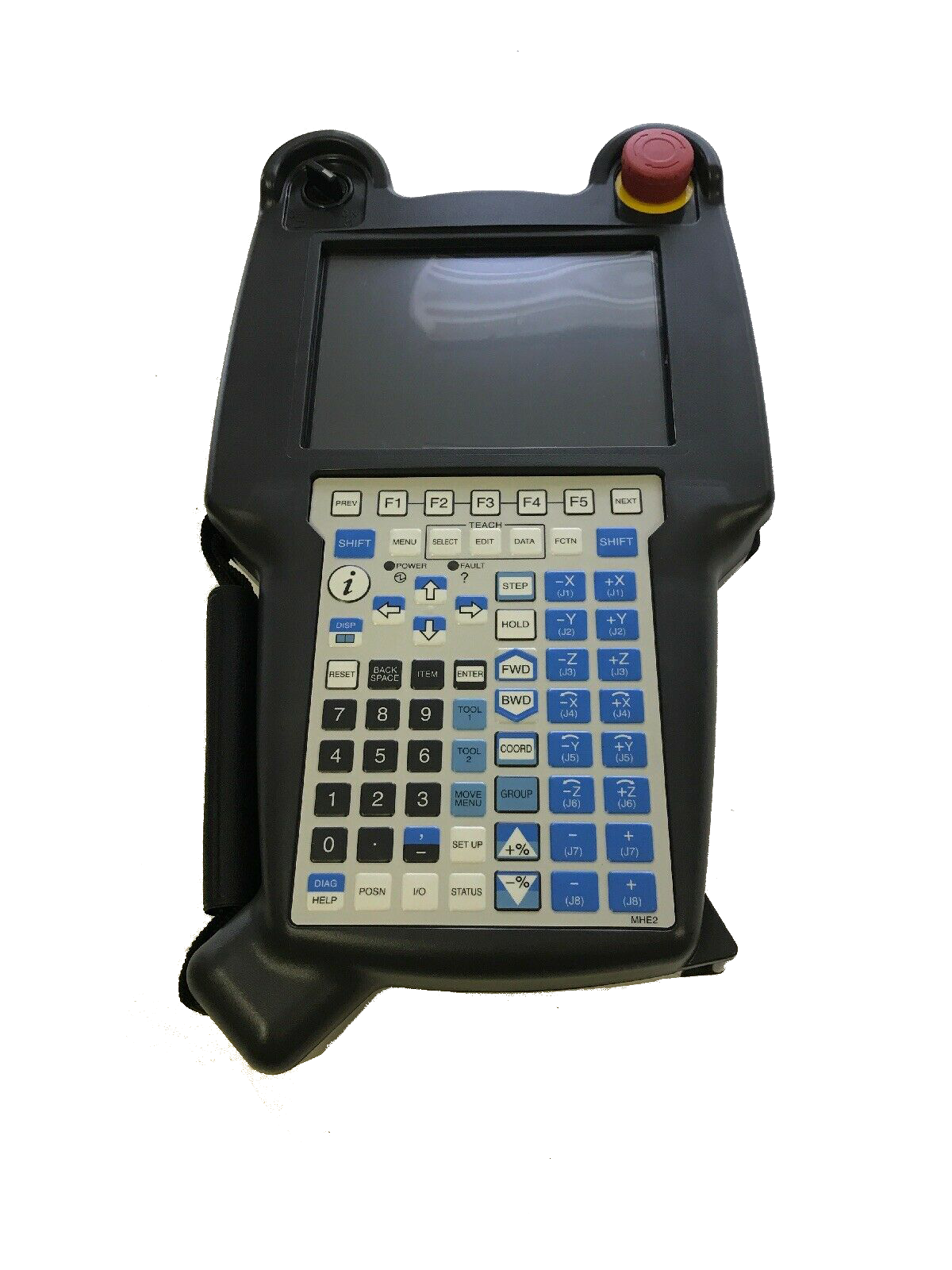
Yes, we provide hands-on training as part of the system handoff in New South Wales. We educate your Australia team on teach pendant navigation, alarm diagnostics, and servo replacement procedures, ensuring that your personnel possess the specific technical knowledge needed for operational self-sufficiency.
Can you integrate Ignition SCADA with robotic cells in New South Wales?
We specialize in SCADA-to-Robot integration, using OPC UA or dedicated drivers to stream robot telemetry to Ignition. This allows for facility-wide visibility of Industrial Robotics Integration assets in Ulladulla, enabling data-driven tracking of robot cycle times and preventive maintenance needs across Australia.
What are the common protocols used for PLC-to-Robot communication in Ulladulla?
We primarily utilize deterministic Ethernet protocols including EtherNet/IP, PROFINET, and EtherCAT. This ensures low-latency synchronization for high-speed Industrial Robotics Integration applications in New South Wales, allowing the master PLC to manage robot state and interlock signals with millisecond precision.
Do you support remote troubleshooting for robotic systems in Australia?
We deploy secure industrial VPN gateways for sites in Ulladulla to provide real-time remote diagnostics. This allows our senior engineers to analyze robot error logs and motion logic in New South Wales without the delay of on-site travel, significantly reducing response times for software-level issues.
How do you manage robot software version control for multi-robot lines in Ulladulla?
We utilize structured repository management and change-control software to track every logic modification. For robotic facilities in New South Wales, this prevents synchronization errors and provides an immutable audit trail of software changes, ensuring that all robotic assets across Australia remain in a validated state.
Is regular mechanical maintenance required for industrial robots in Ulladulla?
Robots require scheduled maintenance including grease analysis, battery replacements, and kinematic verification. We offer preventive maintenance plans in New South Wales that follow manufacturer specs, ensuring that Industrial Robotics Integration assets in Australia maintain their accuracy and reliability over tens of thousands of operational hours.
Can you provide custom drivers for specialized robotic end-effectors in New South Wales?
Where standard libraries are unavailable, our engineers develop custom logic to manage specialized EOAT like ultrasonic welders or adaptive grippers. This ensures that unique process tools in Ulladulla are accurately controlled and monitored by the primary robot controller across Australia.
How is robot repeatability measured during commissioning in Ulladulla?
We use precision measurement tools to verify the robot's ability to return to a specific point under load. For systems in New South Wales, we document repeatability over multiple cycles, ensuring the Industrial Robotics Integration deployment meets the sub-millimeter requirements of your specific Australia assembly process.
Related Resources
Navigation
Technical Foundations
Quantify Your Robotic Scope in Ulladulla
Generic automation quotes lead to underscoped integration risks. Utilize our technical diagnostic to define your I/O magnitude, kinematic requirements, and safety performance levels before vendor introduction.
Begin Robotic Scope Diagnostic